The Hide Way Intergenerational Housing Scheme
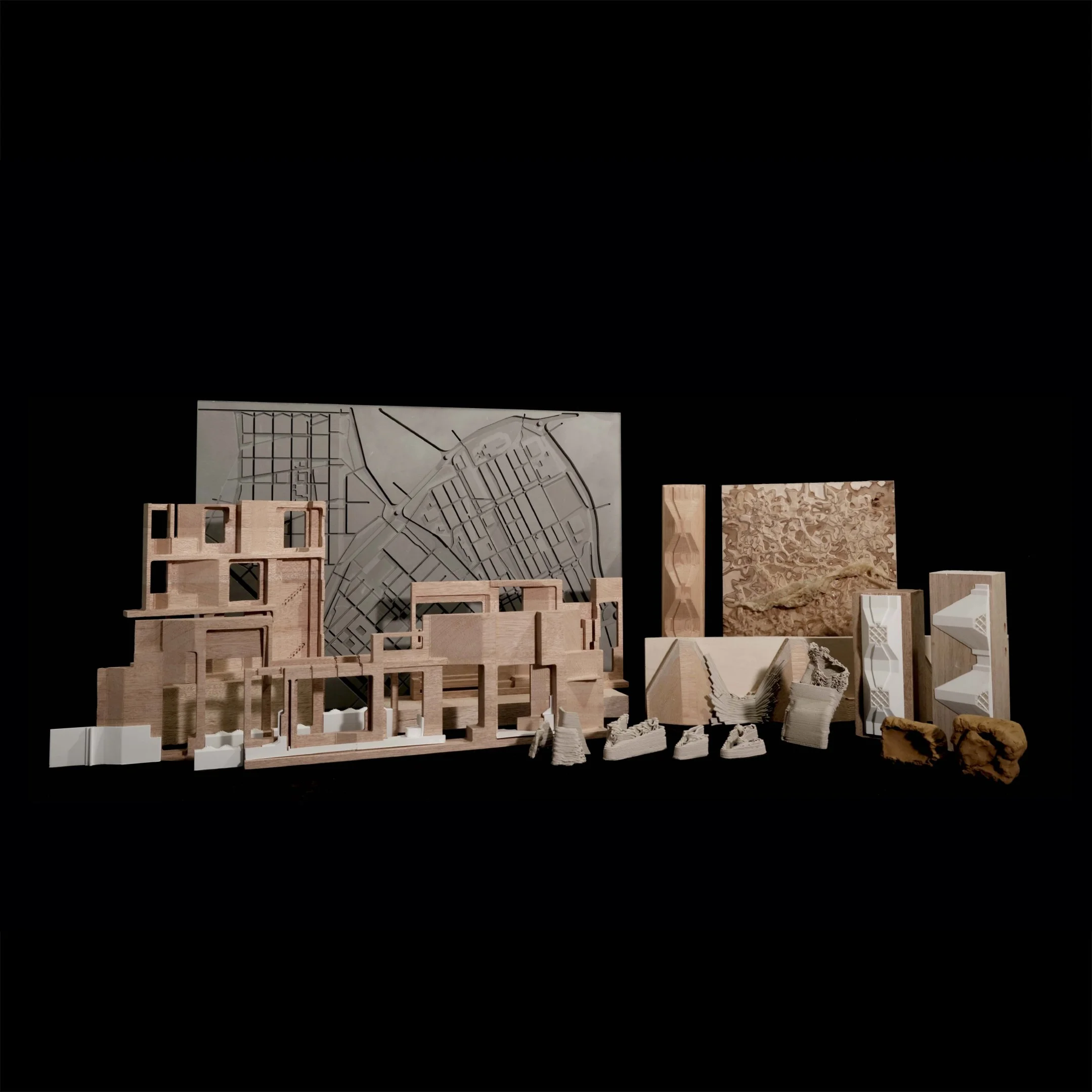
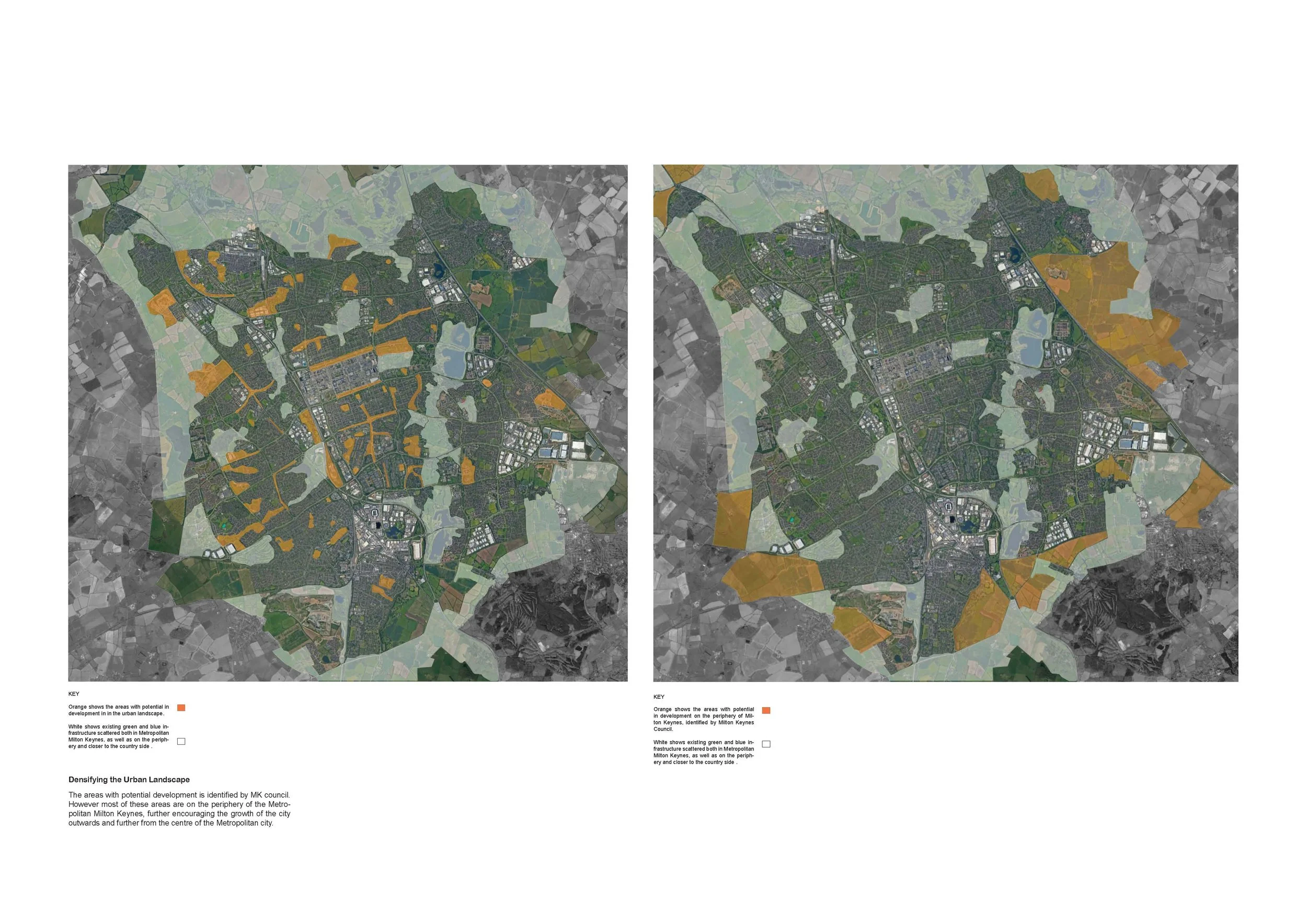
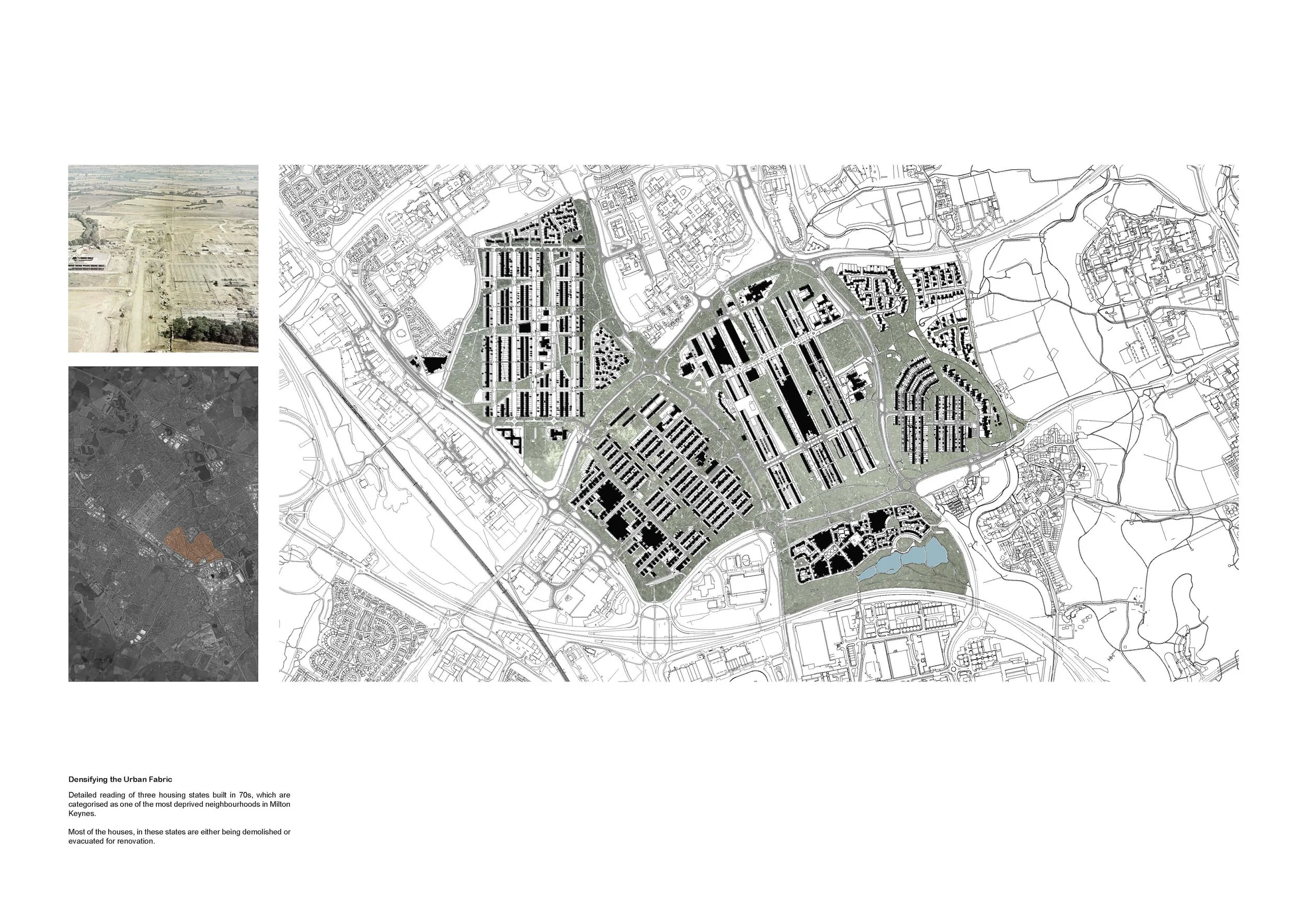
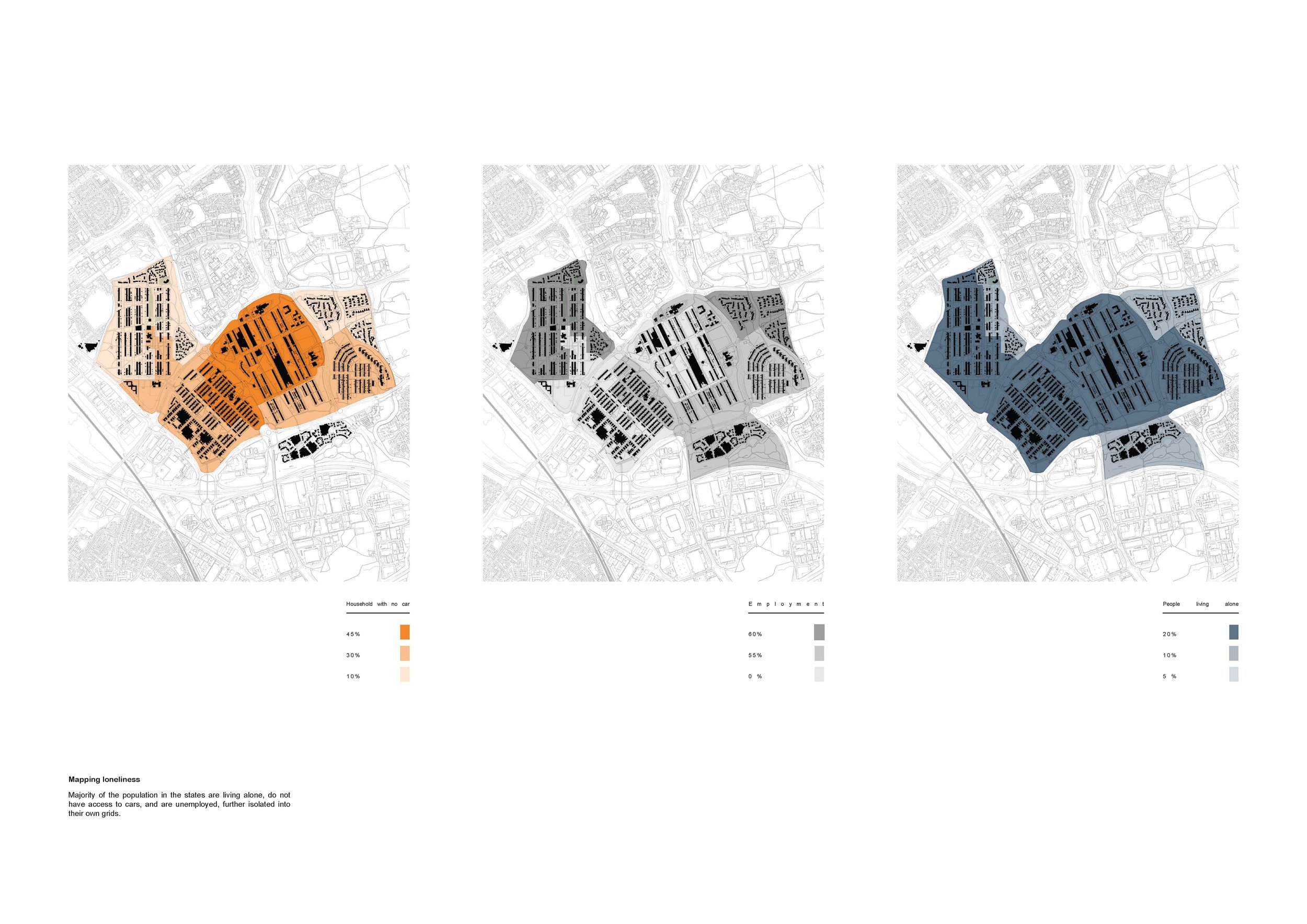
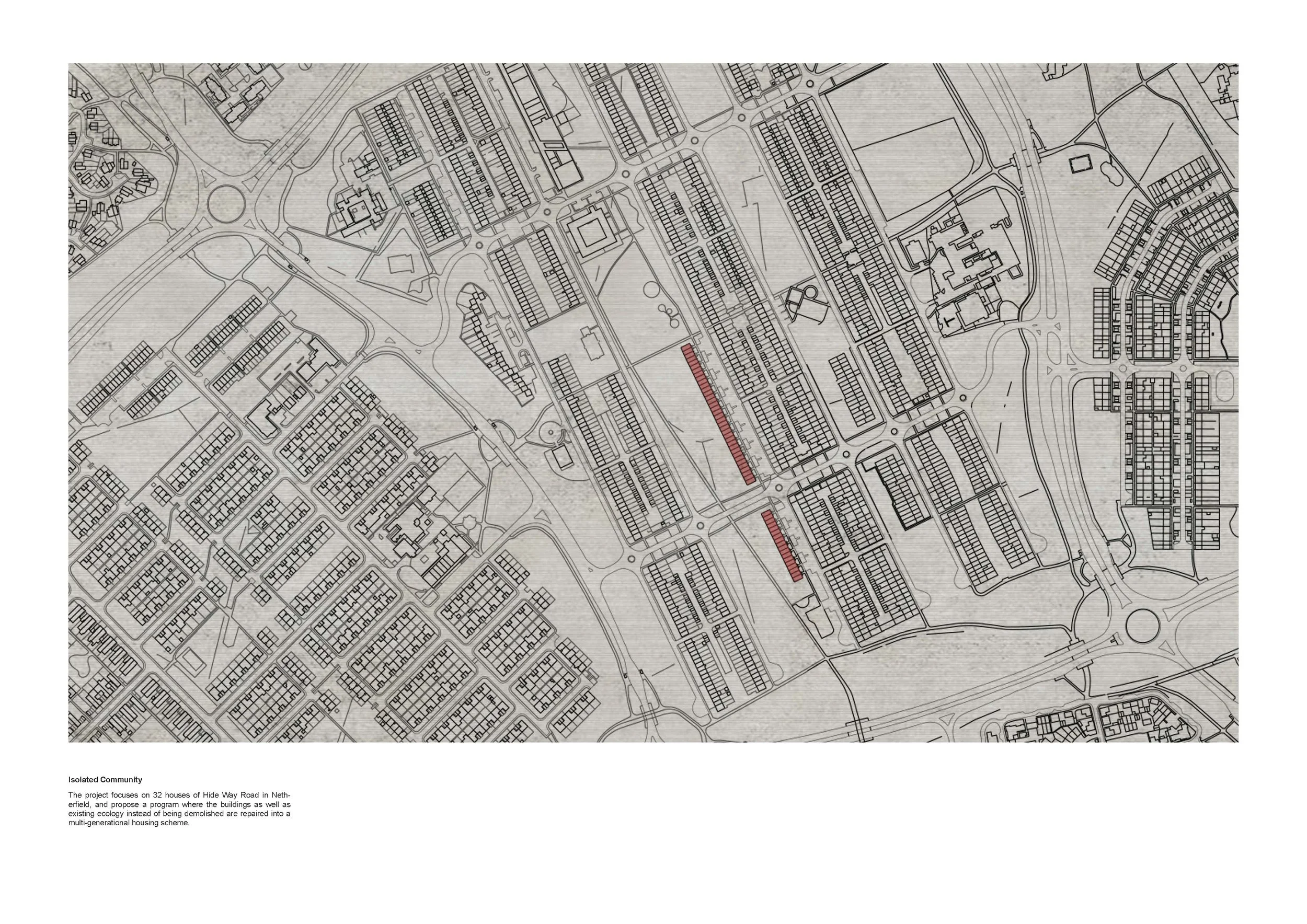
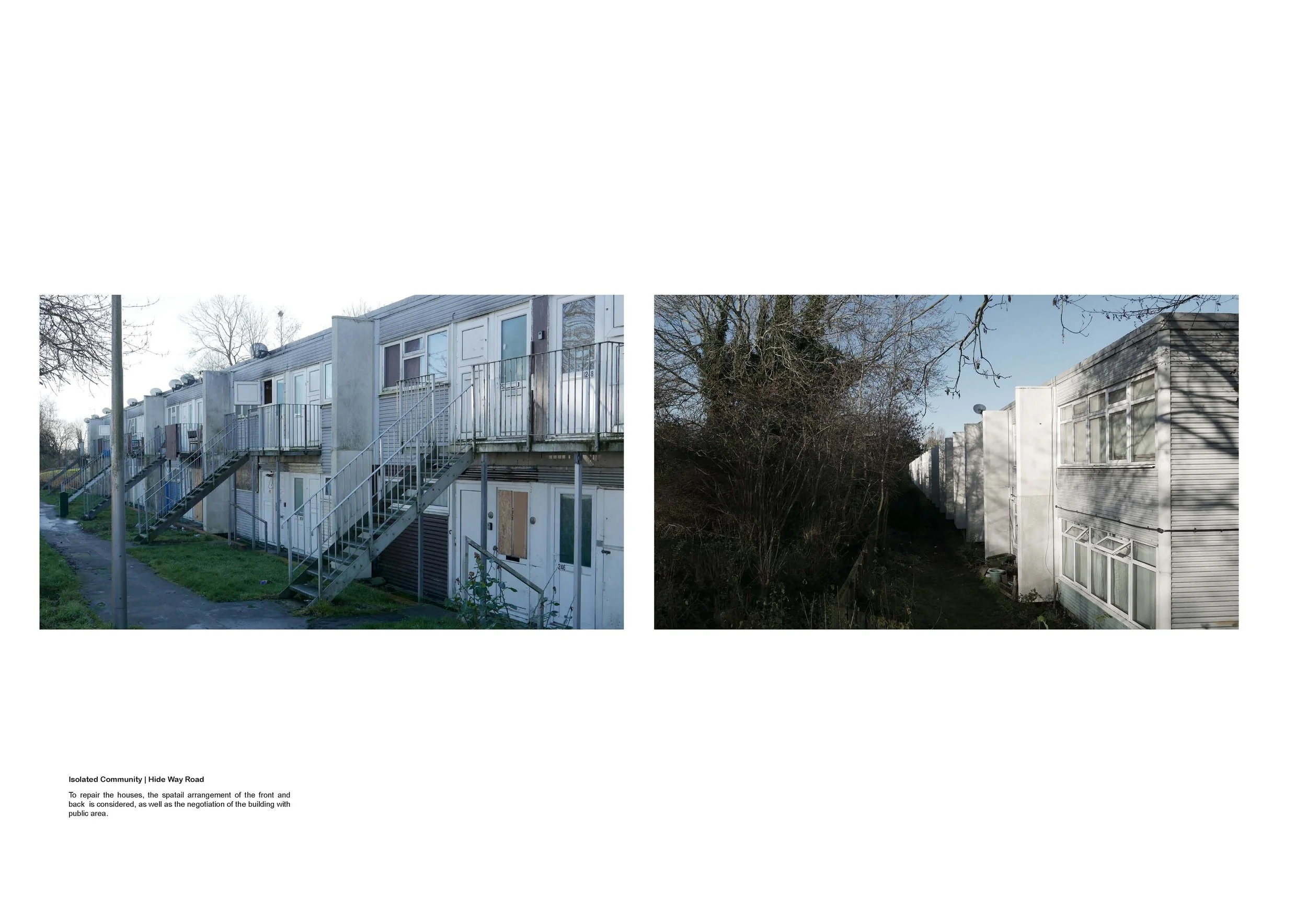
The Hide Way Intergenerational Housing scheme proposes a systematic program of repair and rebuild that not only focuses on rebuilding the existing houses, but also engages with the existing ecology and community. This critical approach engages a new system of thought for rebuilding programs, in which the displacement and dispossession of community and houses are erased from the process. Instead, the program of rebuilding promotes a reconnection of community and people. Situated in Milton Keynes, the project reconnects the isolated community of Hide way to the rest of the Netherfield state, and to the wider Milton Keynes Metropolitan. Through the reconfiguration of social spaces, the spatial arrangement of the house and the hierarchy of public/private thresholds, the project advocates for a more caring living environment between the elderly population that live alone, and the younger family with children.
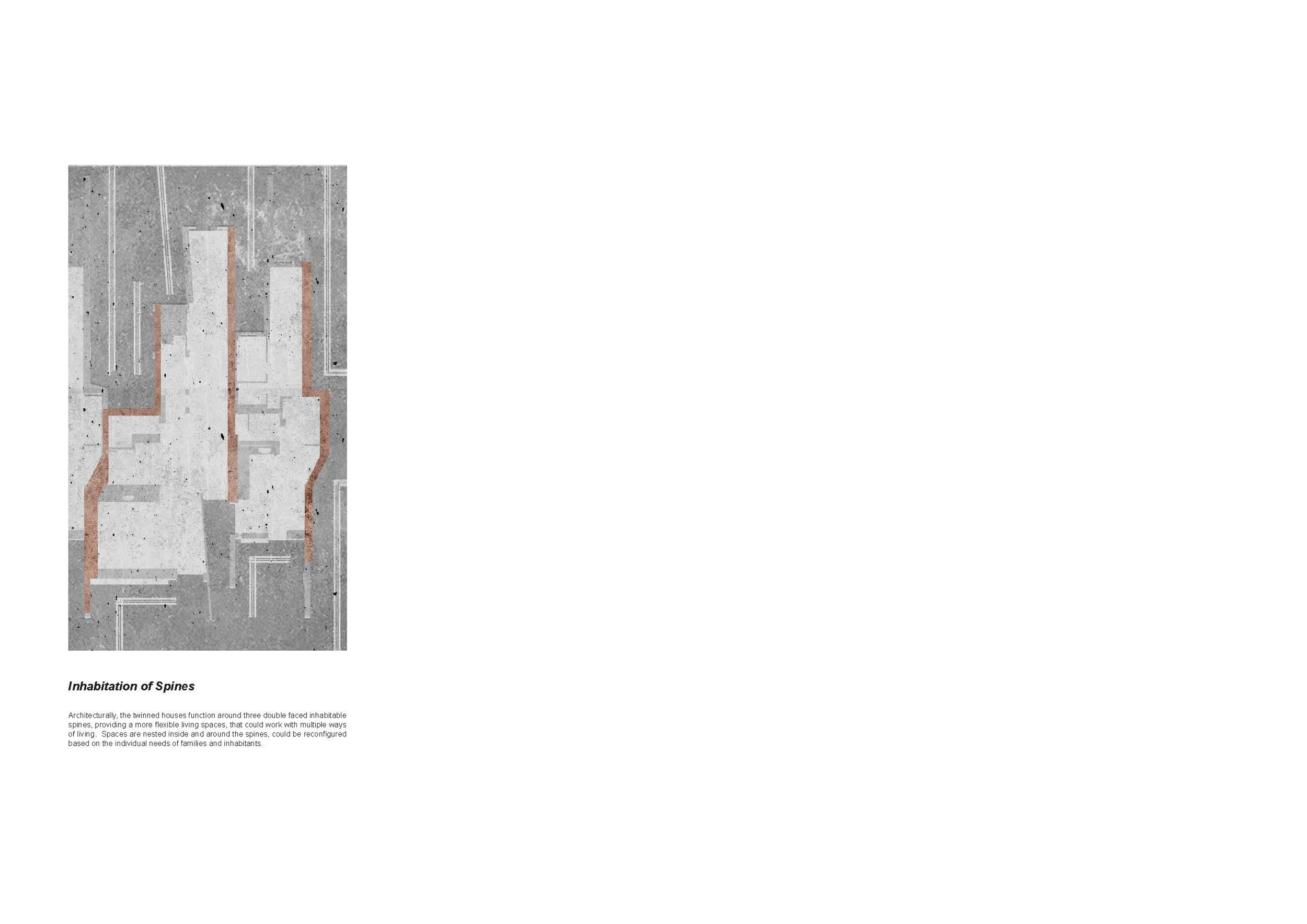
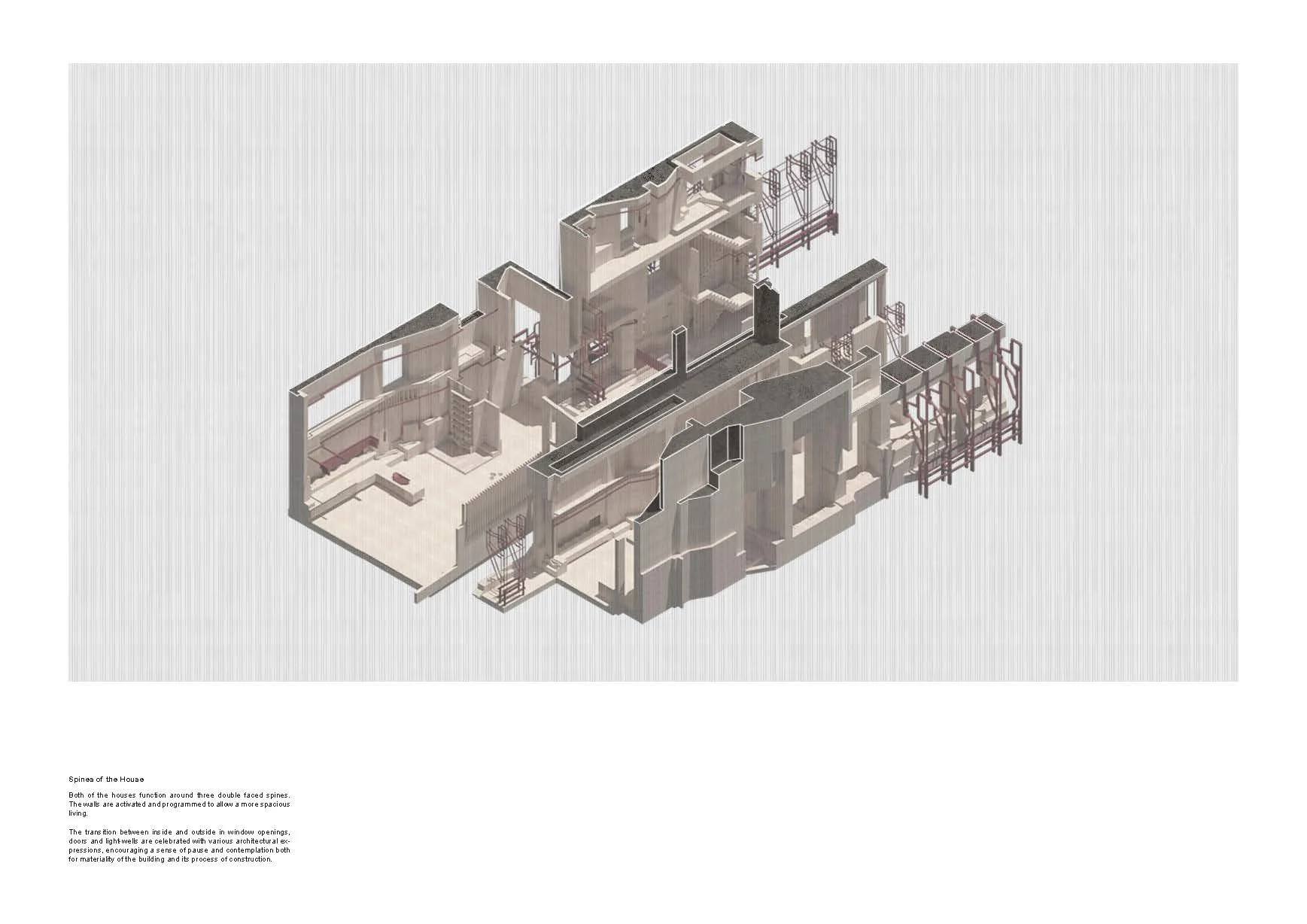
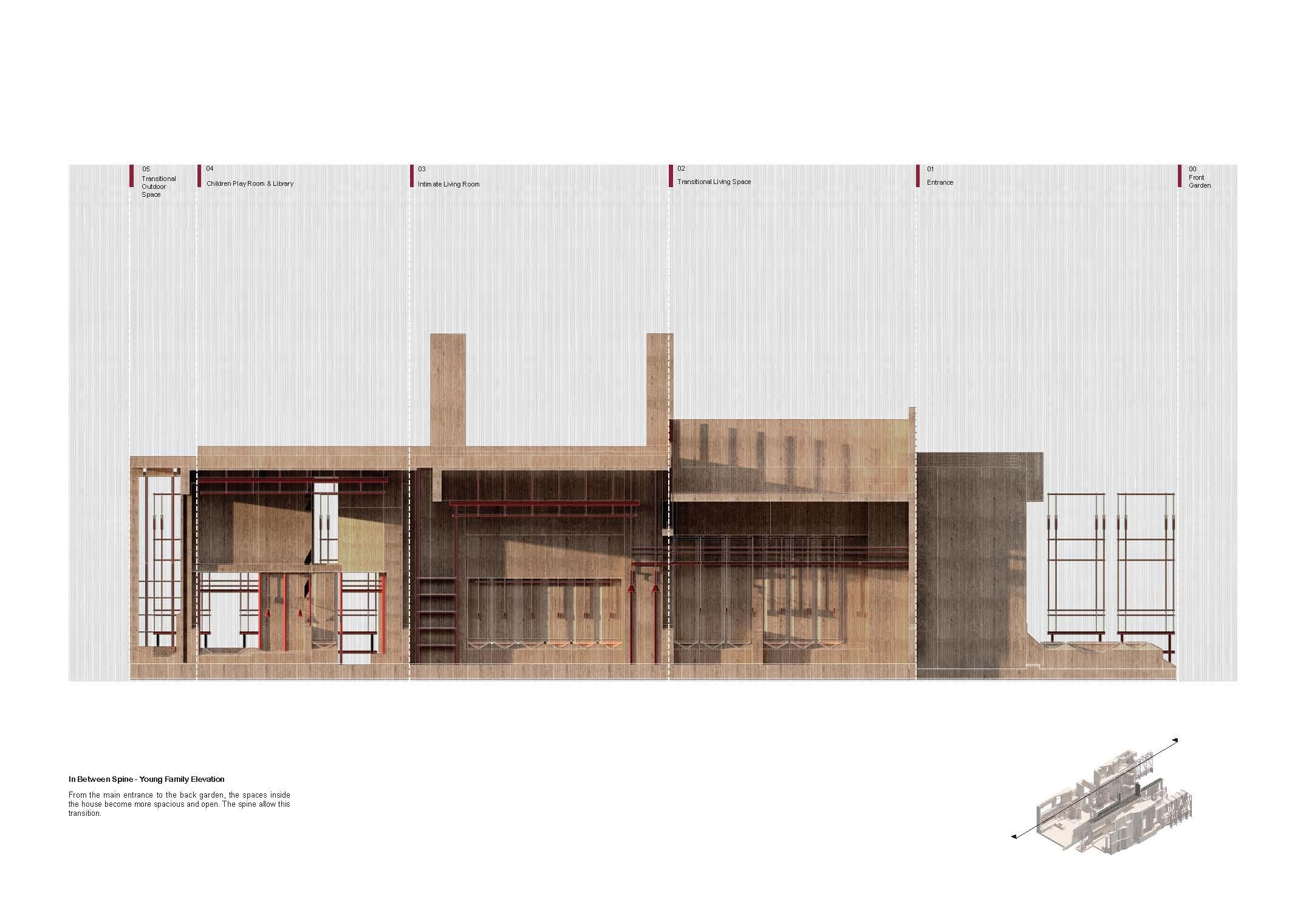
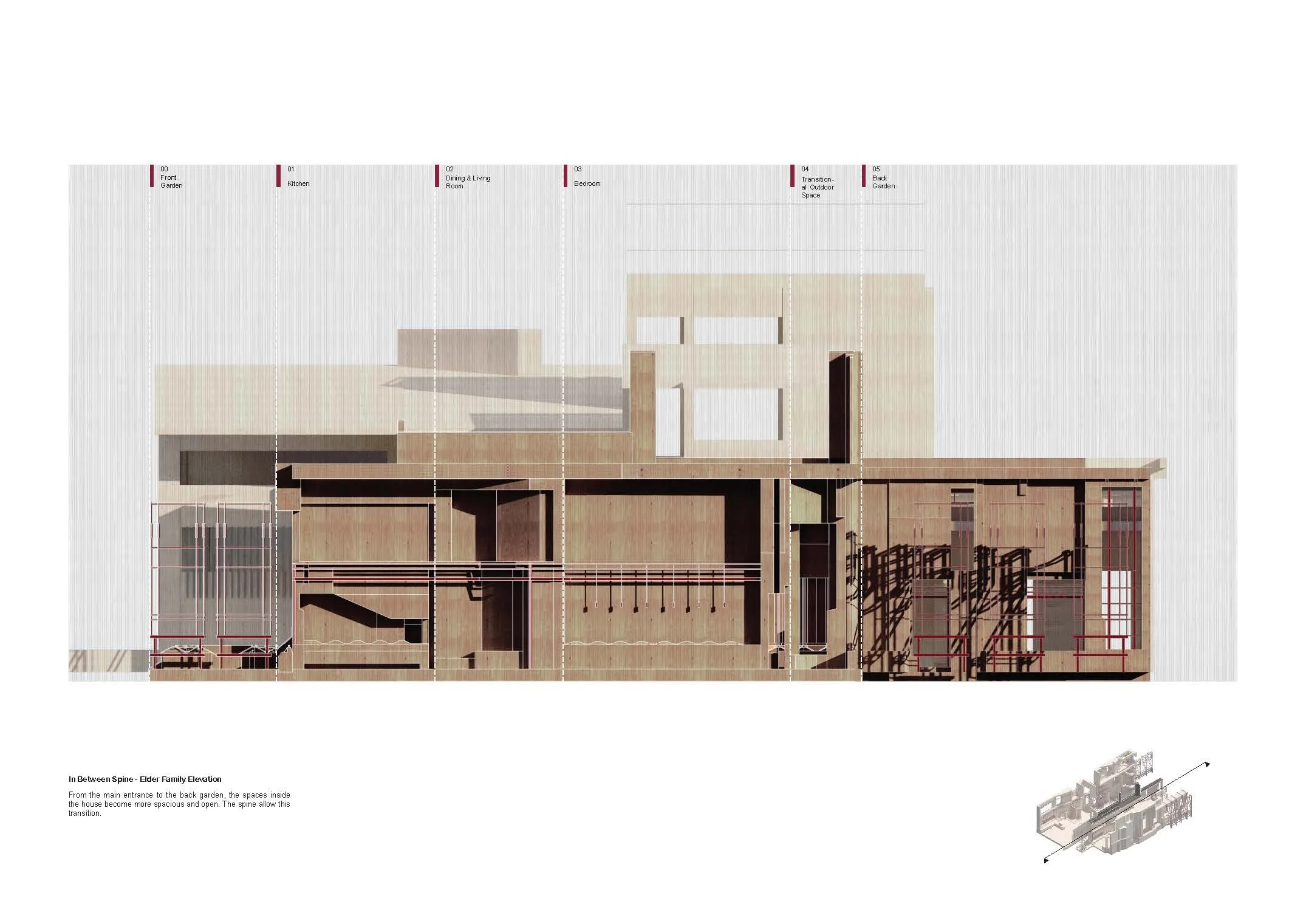
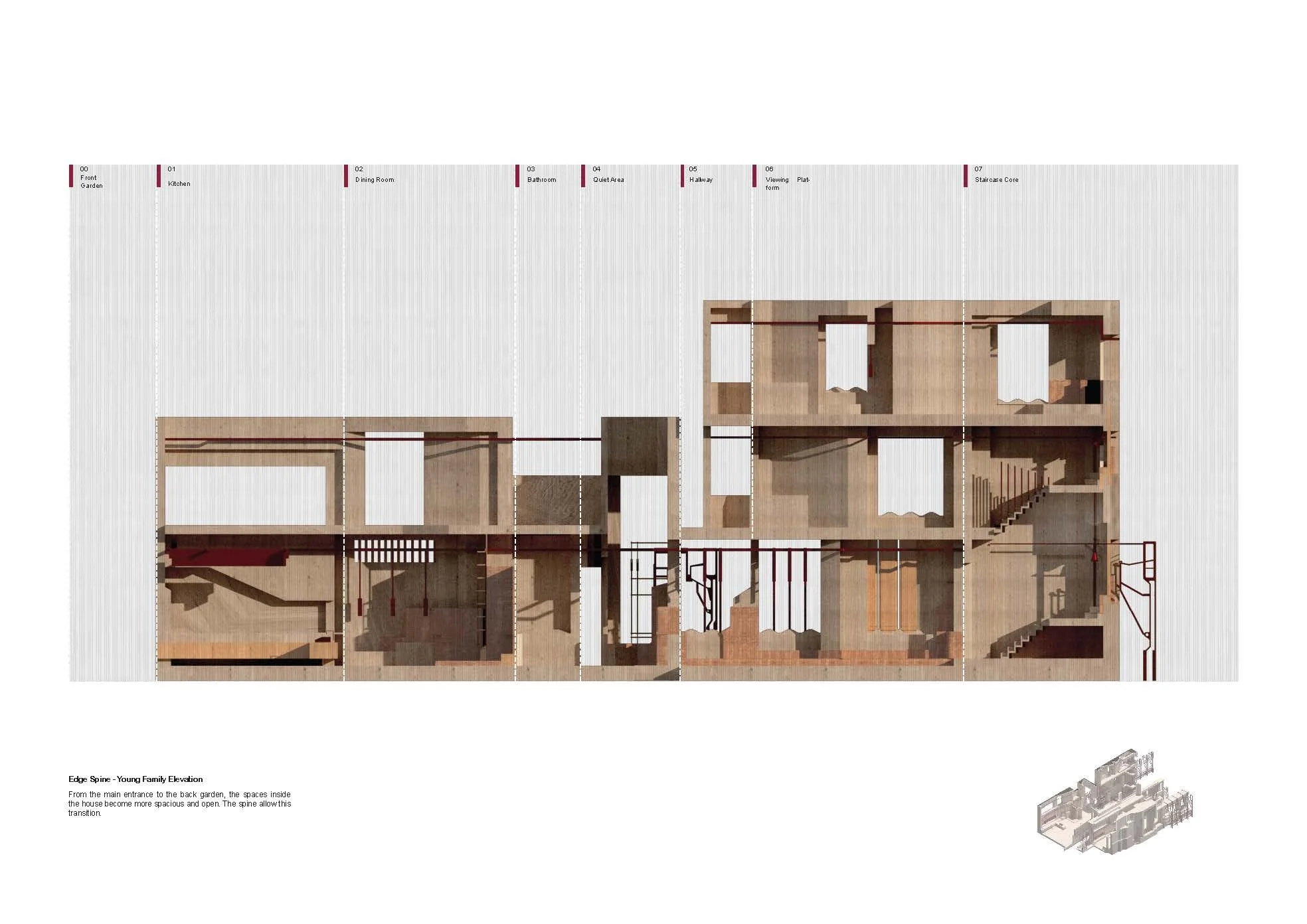
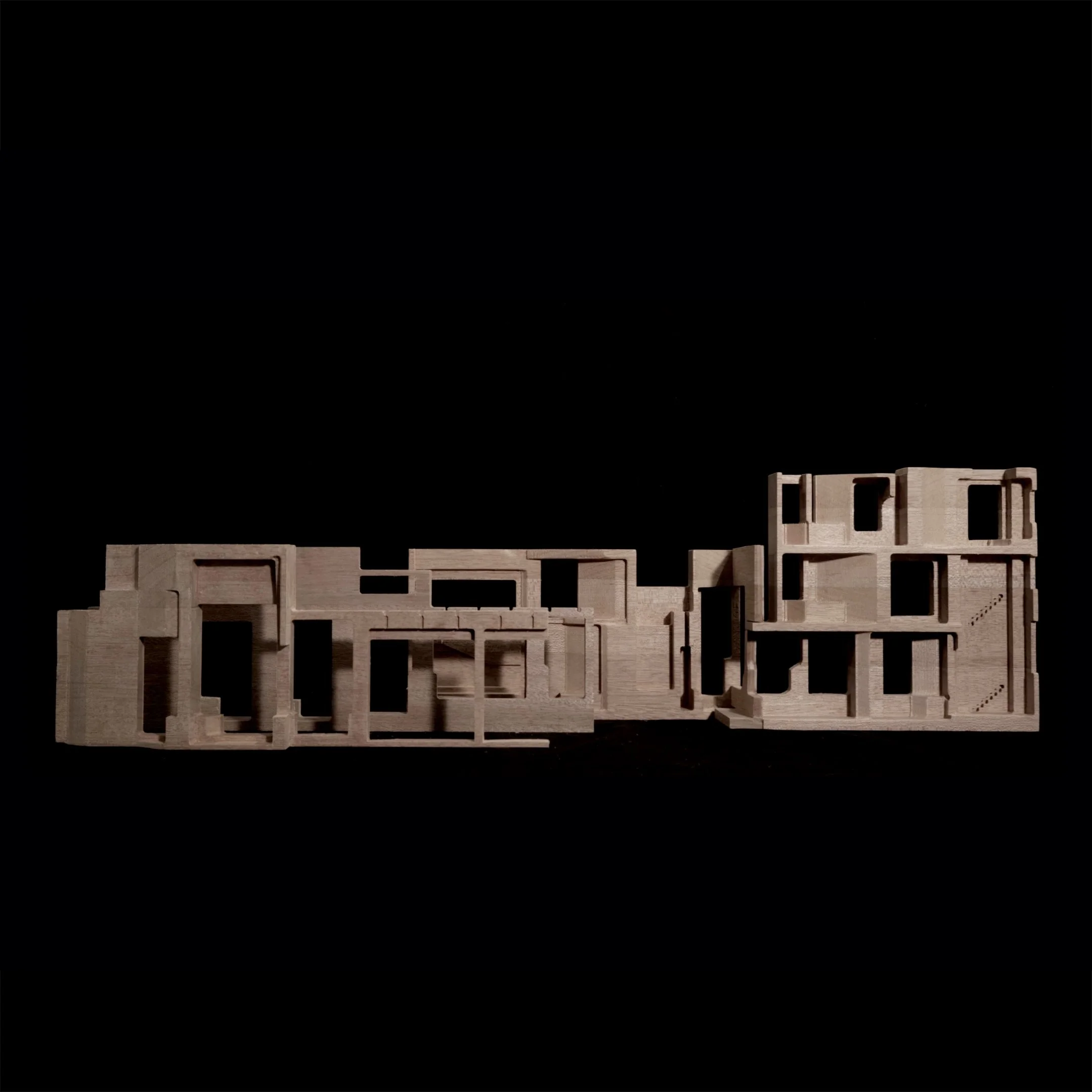
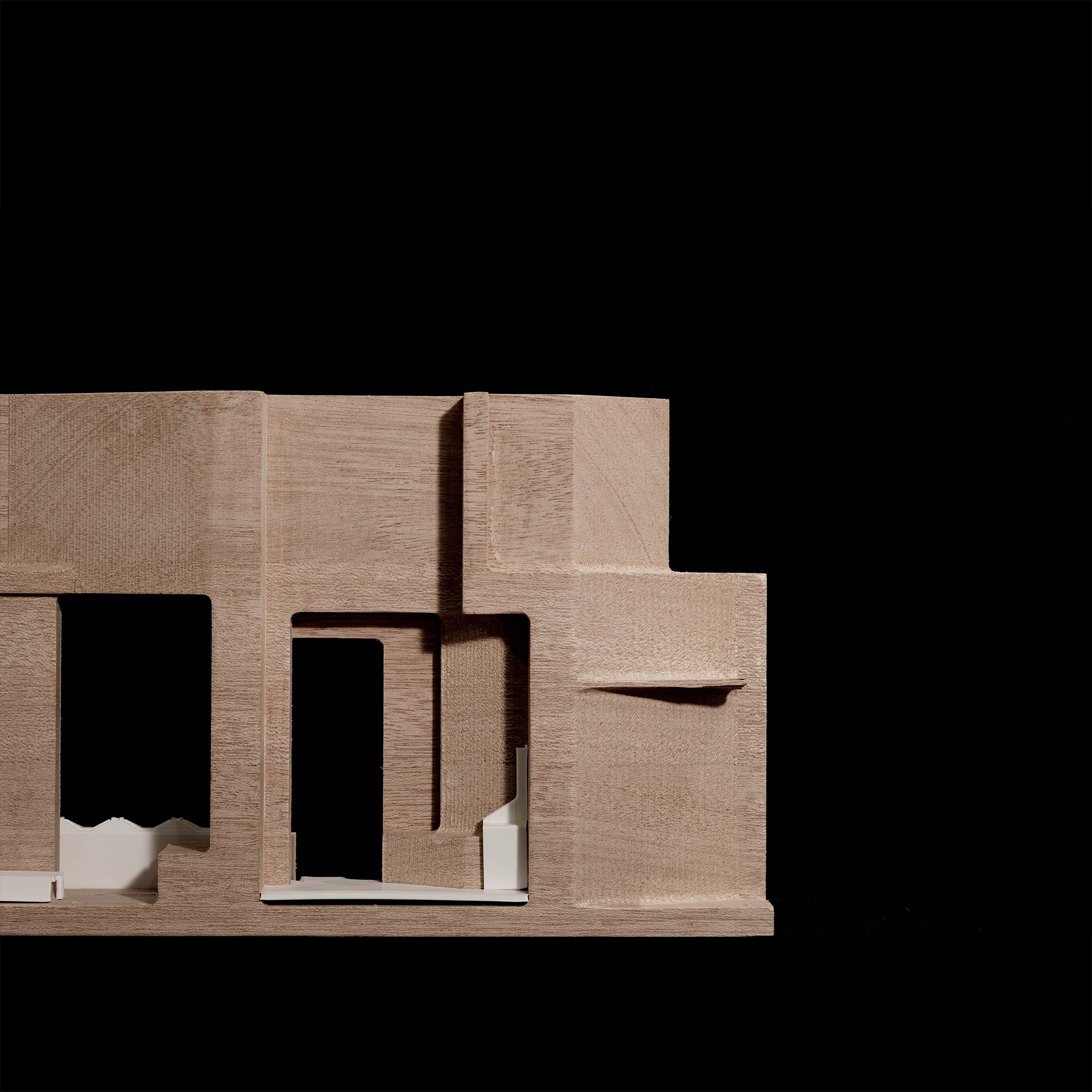
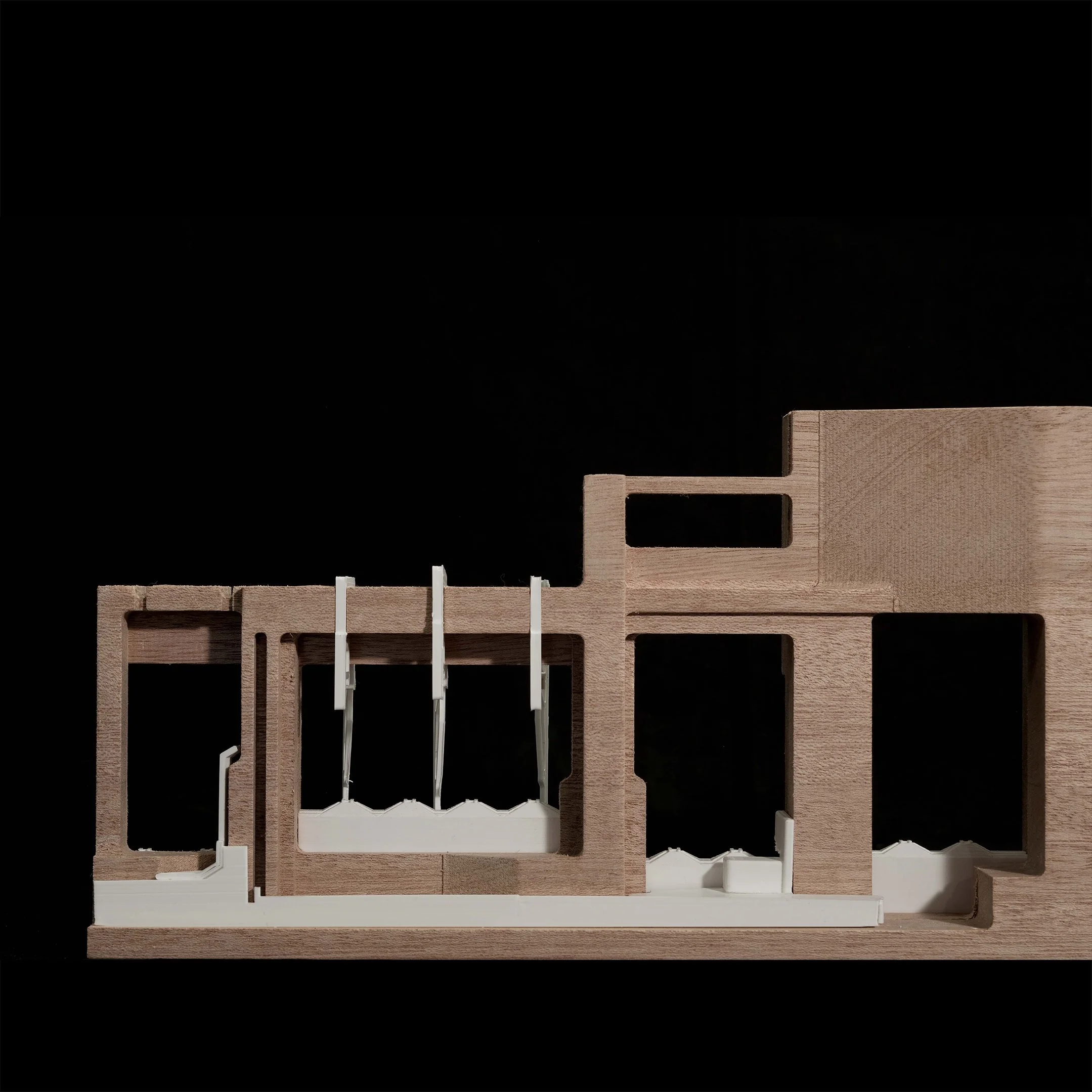
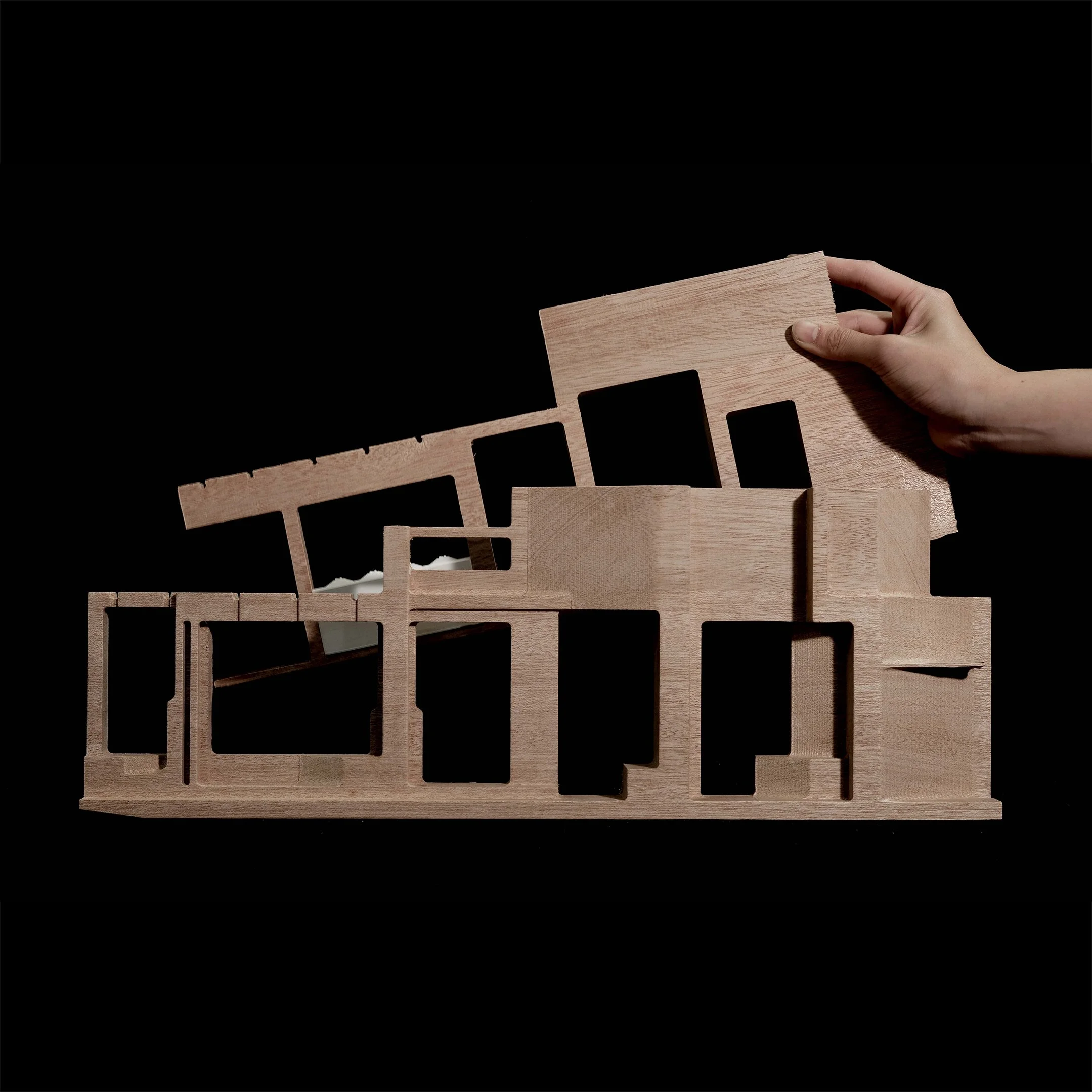
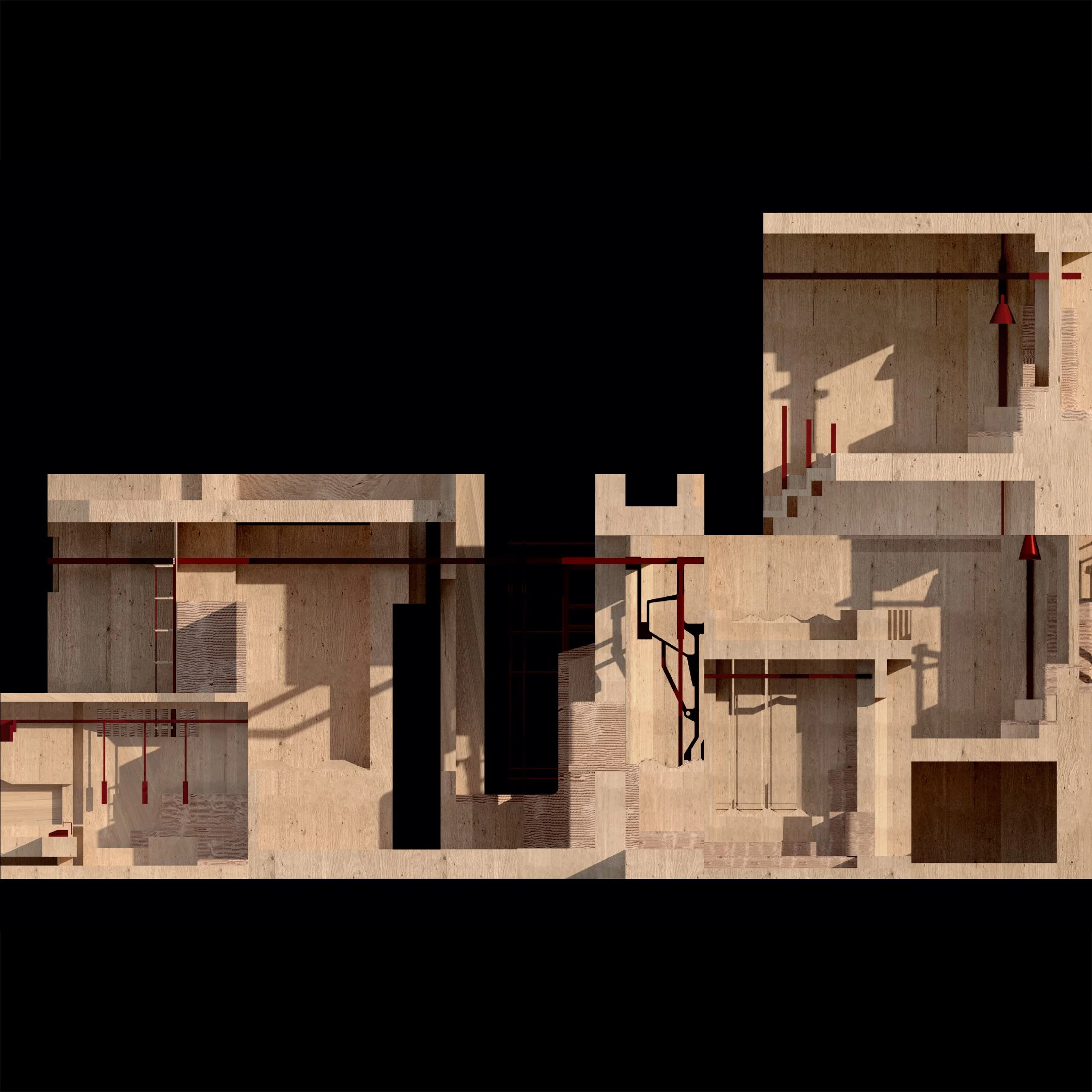
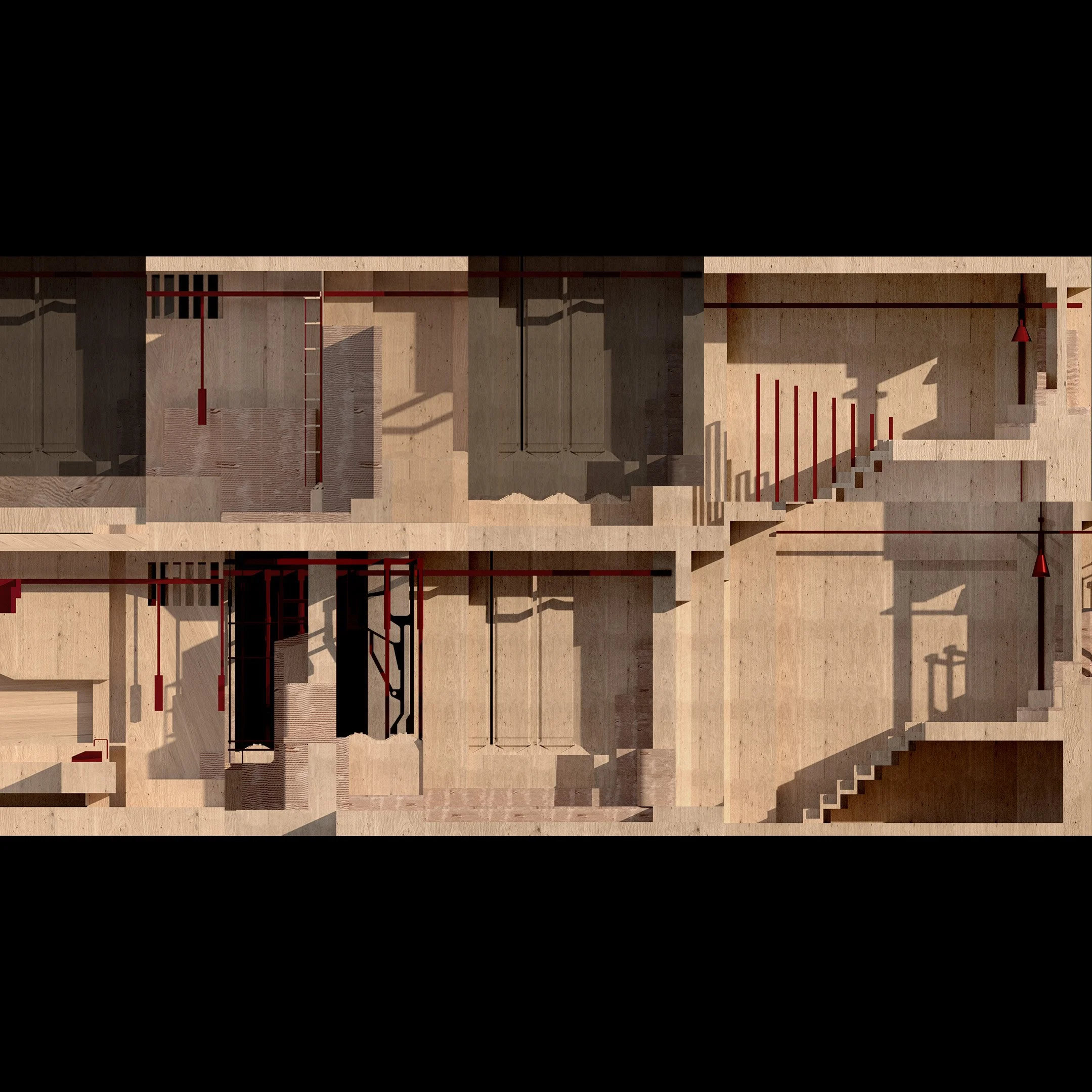
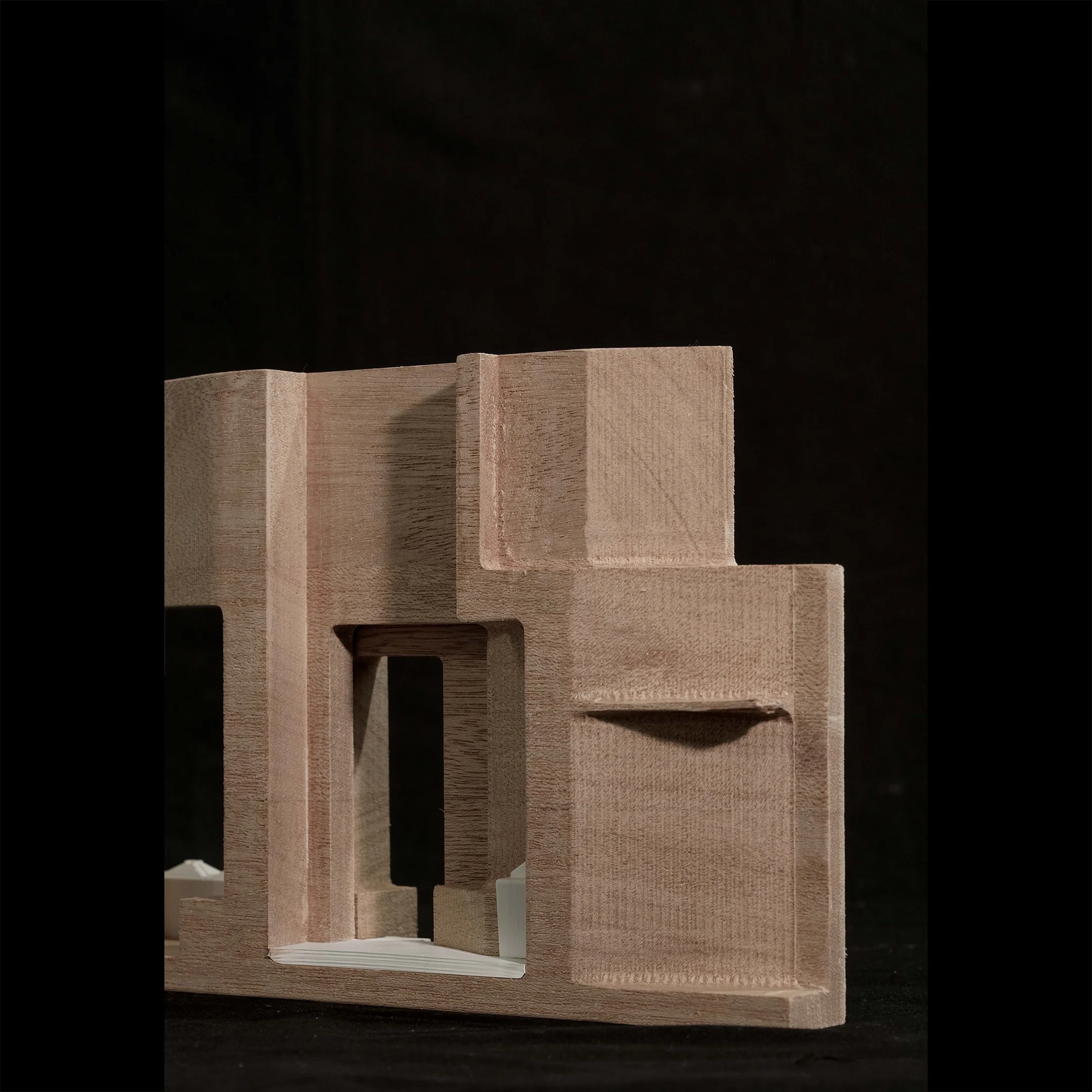
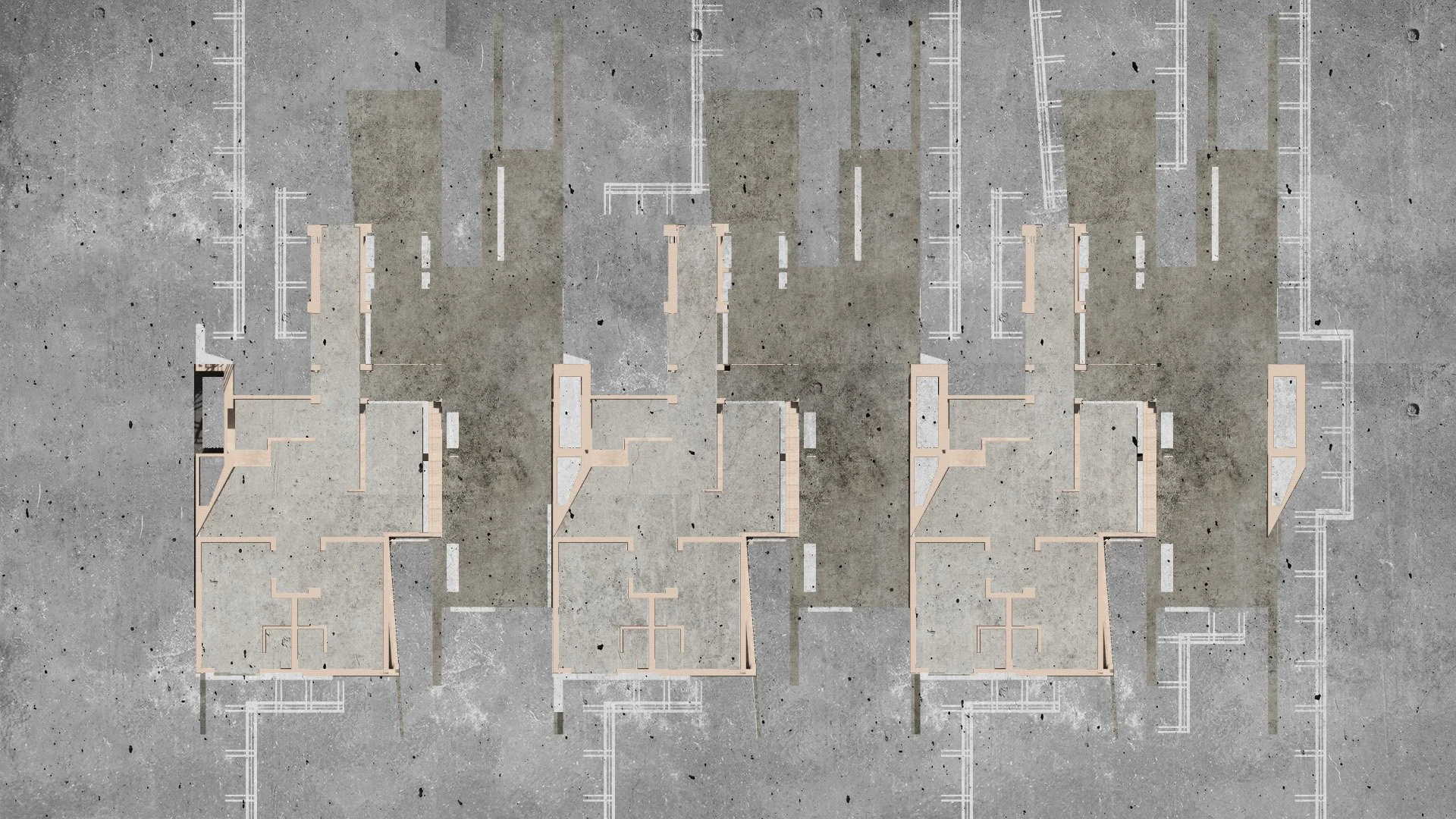
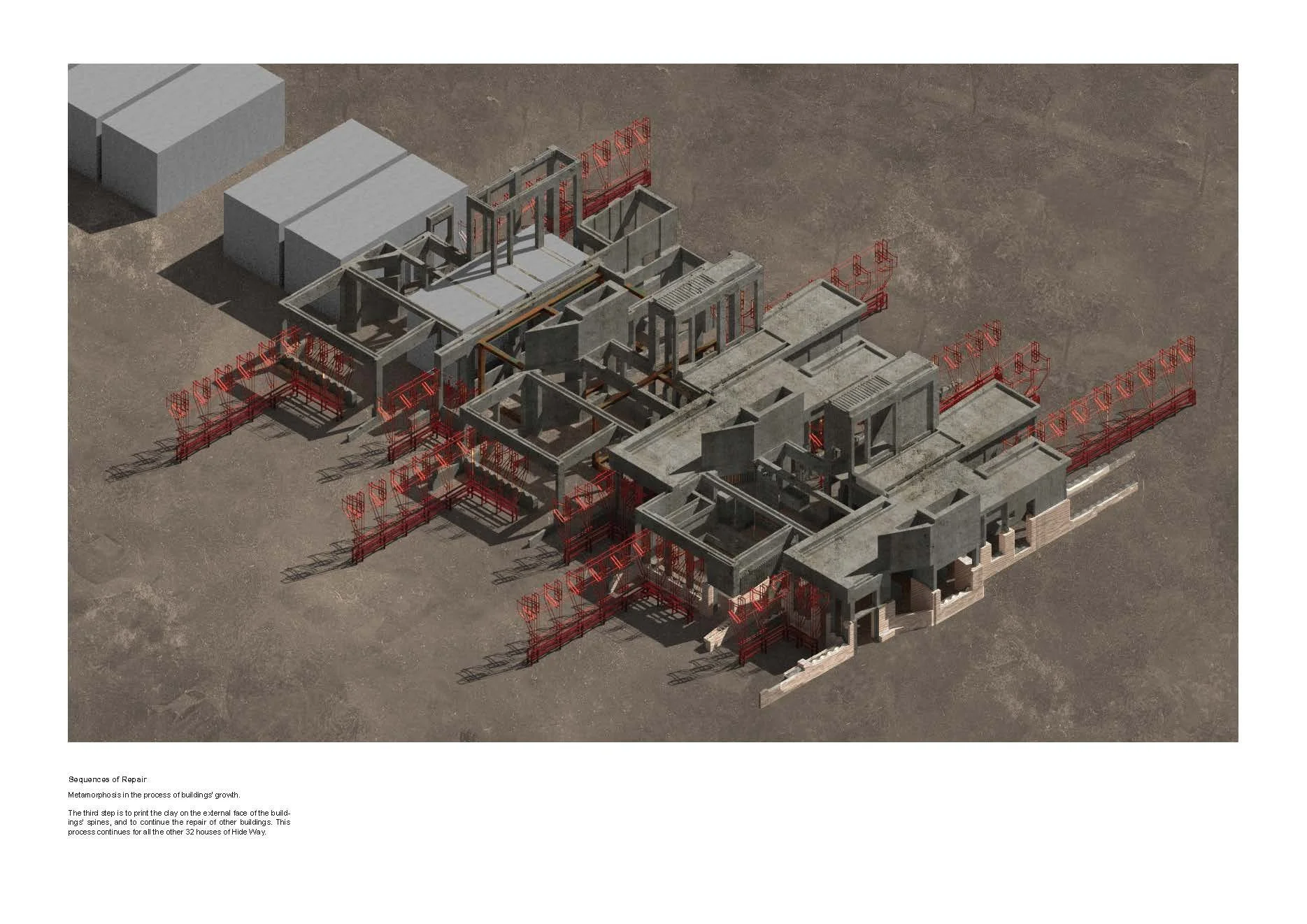
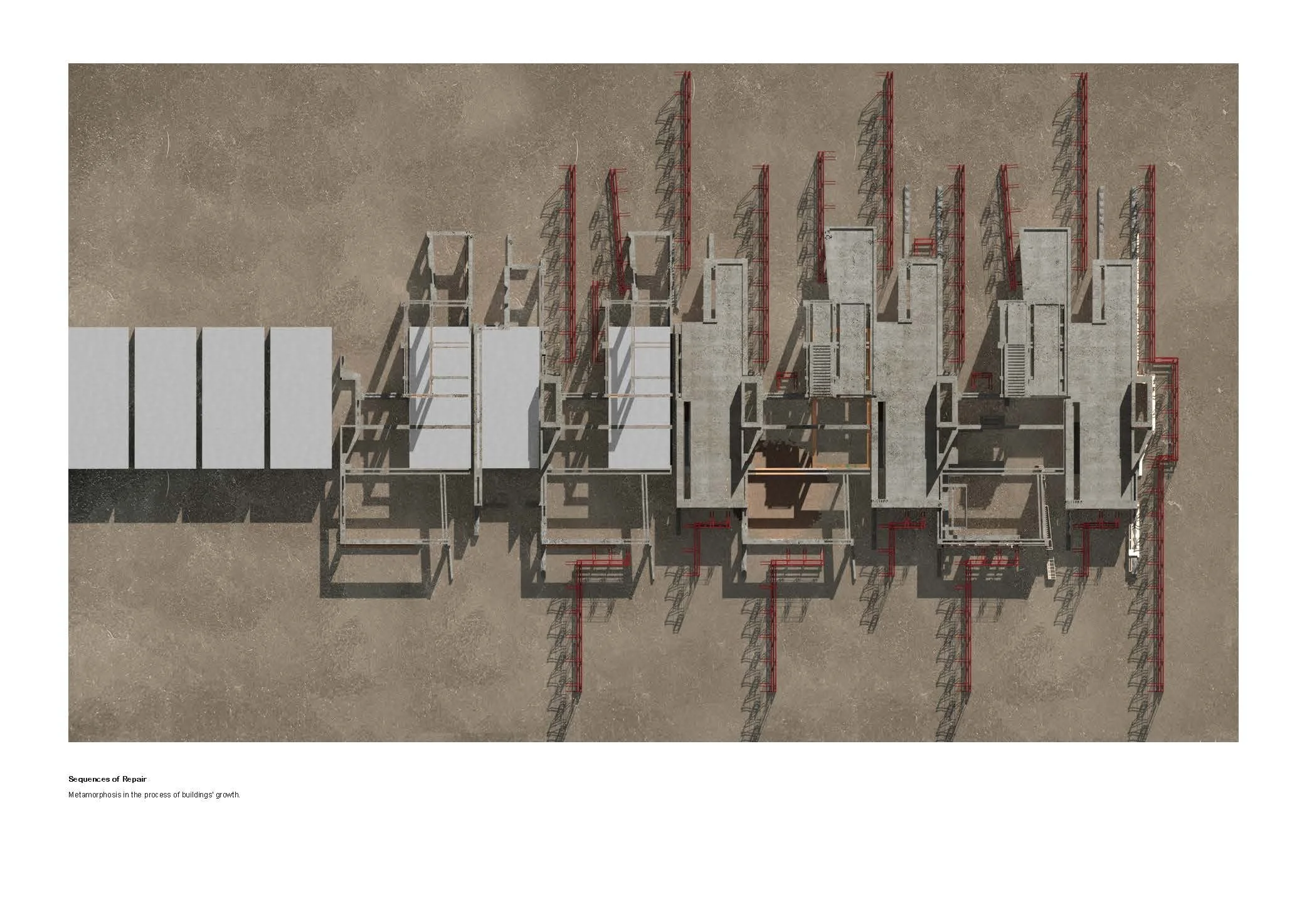
Architecturally, the twinned houses function around three double faced inhabitable spines, providing a more flexible living space that could work with multiple ways of living. Spaces are nested inside and around the spines, and could be reconfigured based on the individual needs of families and inhabitants.
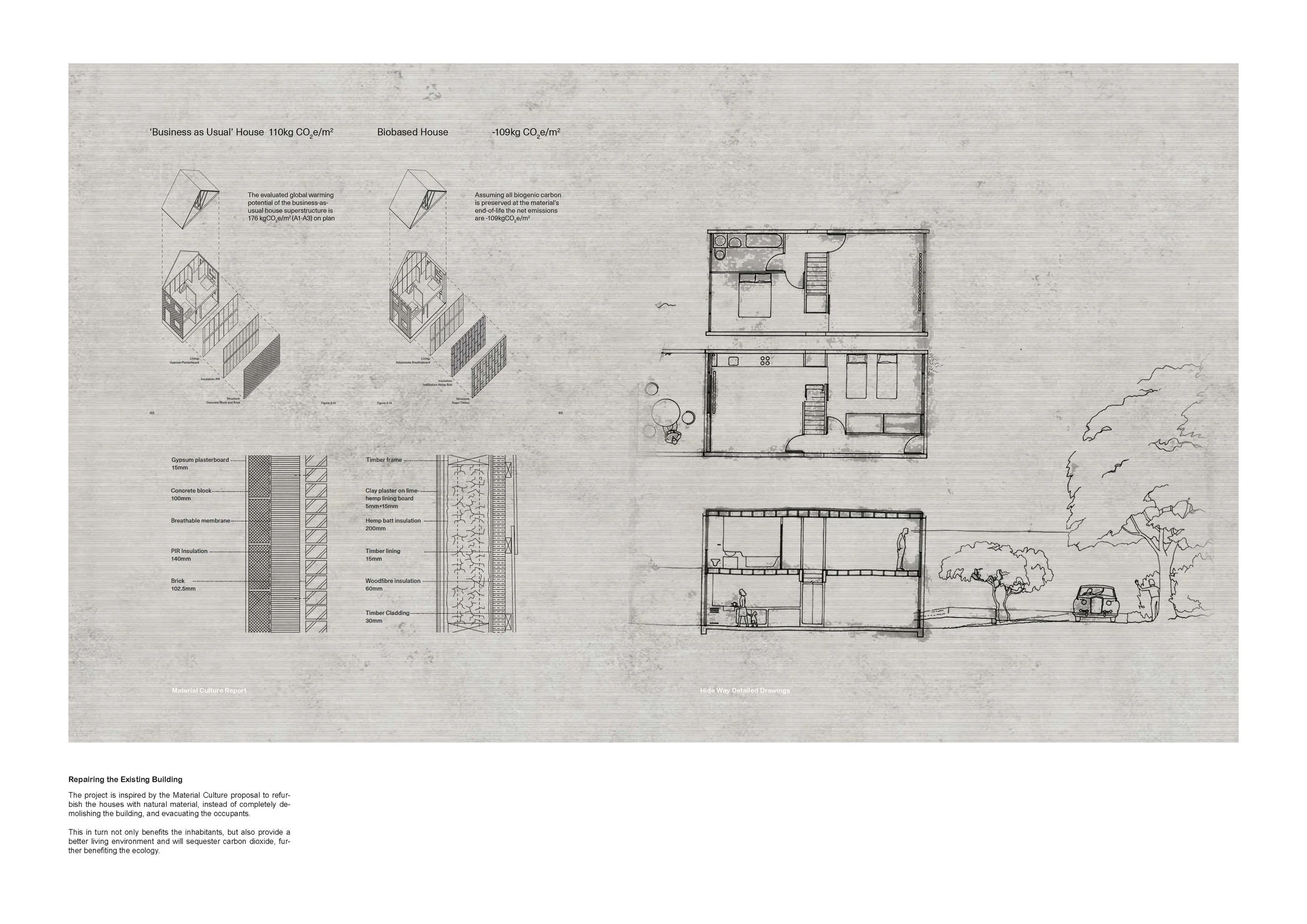
In parallel, the project is fascinated with the liminality of materials used and their social, and environmental impact on the housing and people. The use of clay as a material for construction of the building’s second skin, encourages a move away from homogenous housing schemes. It renders the spaces and buildings as less static, providing textural variations, visual warmth, and environmental comfort. The co-existence of the architecture and infrastructure, becomes a constant reminder of architecture’s cyclic metamorphosis. Here the impermanence is celebrated and a sense of care
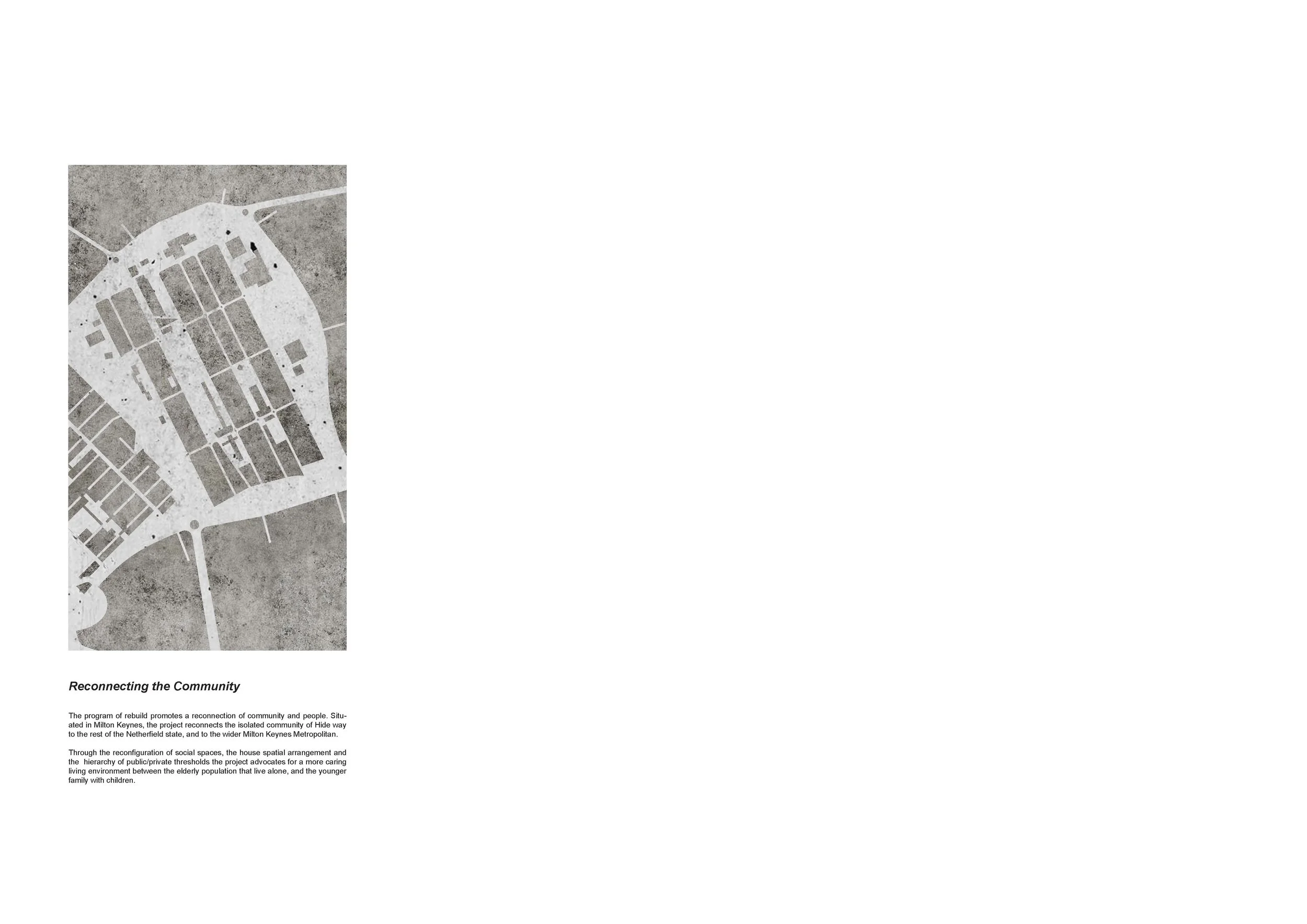
Reconnecting the Community
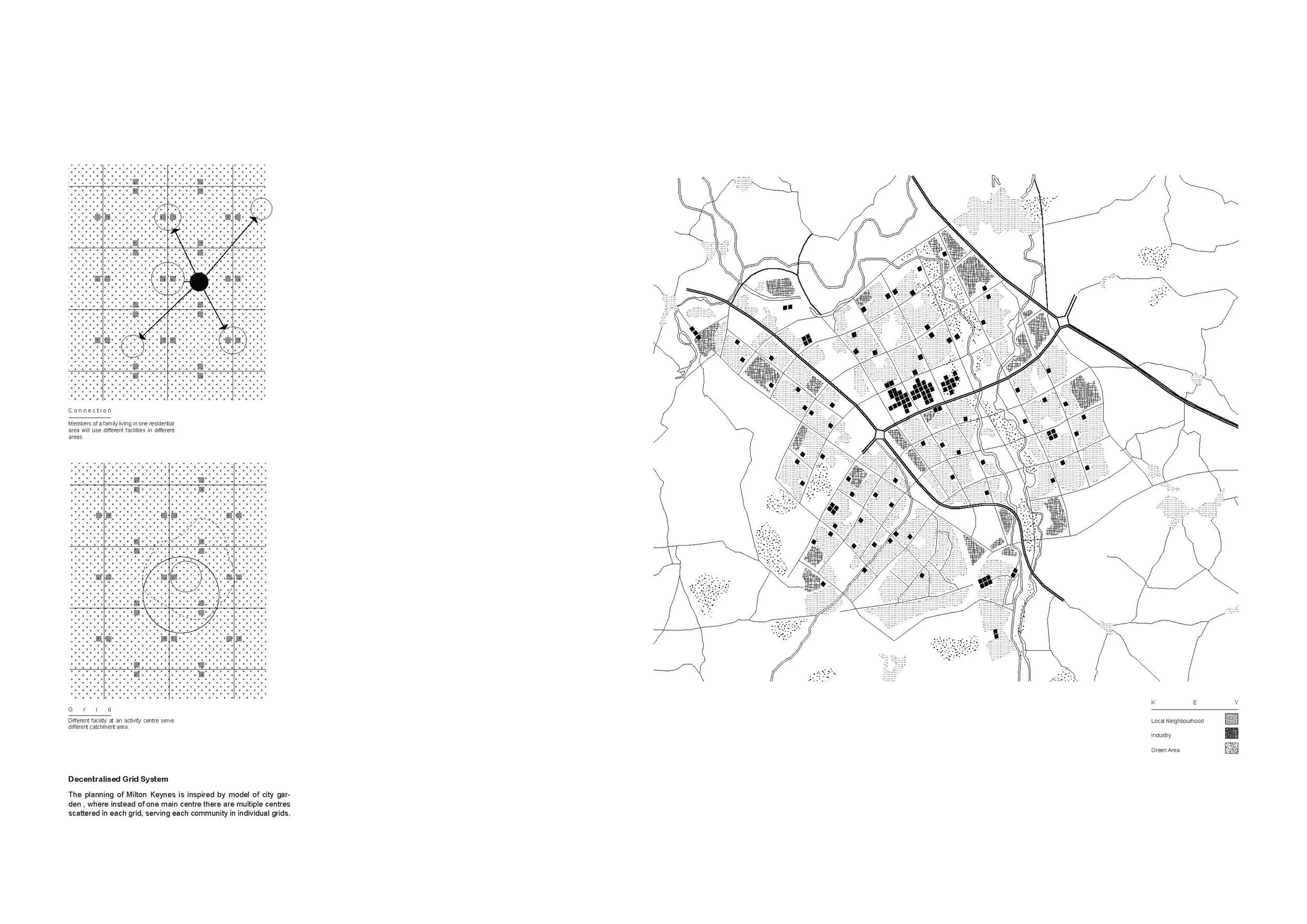
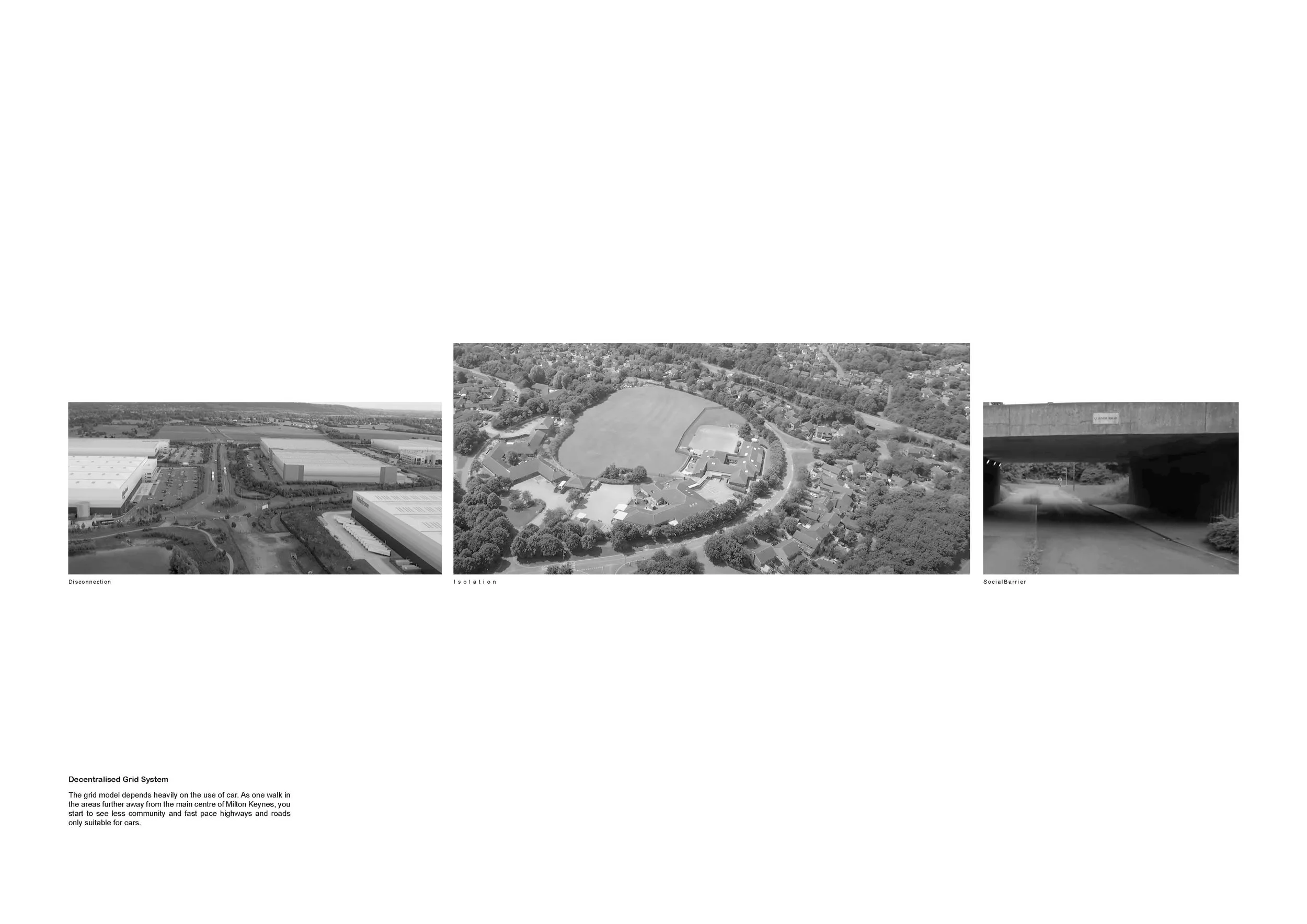
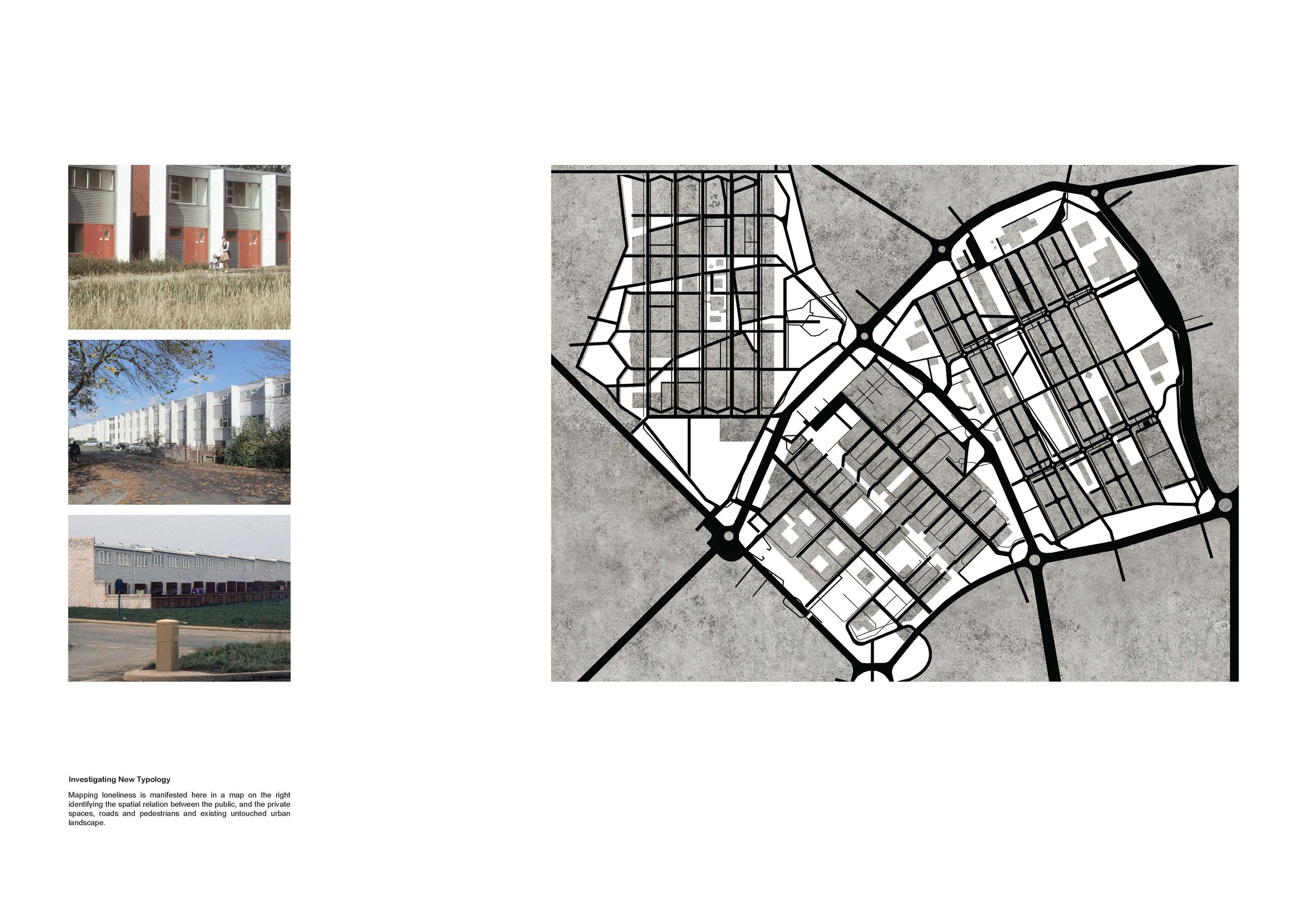
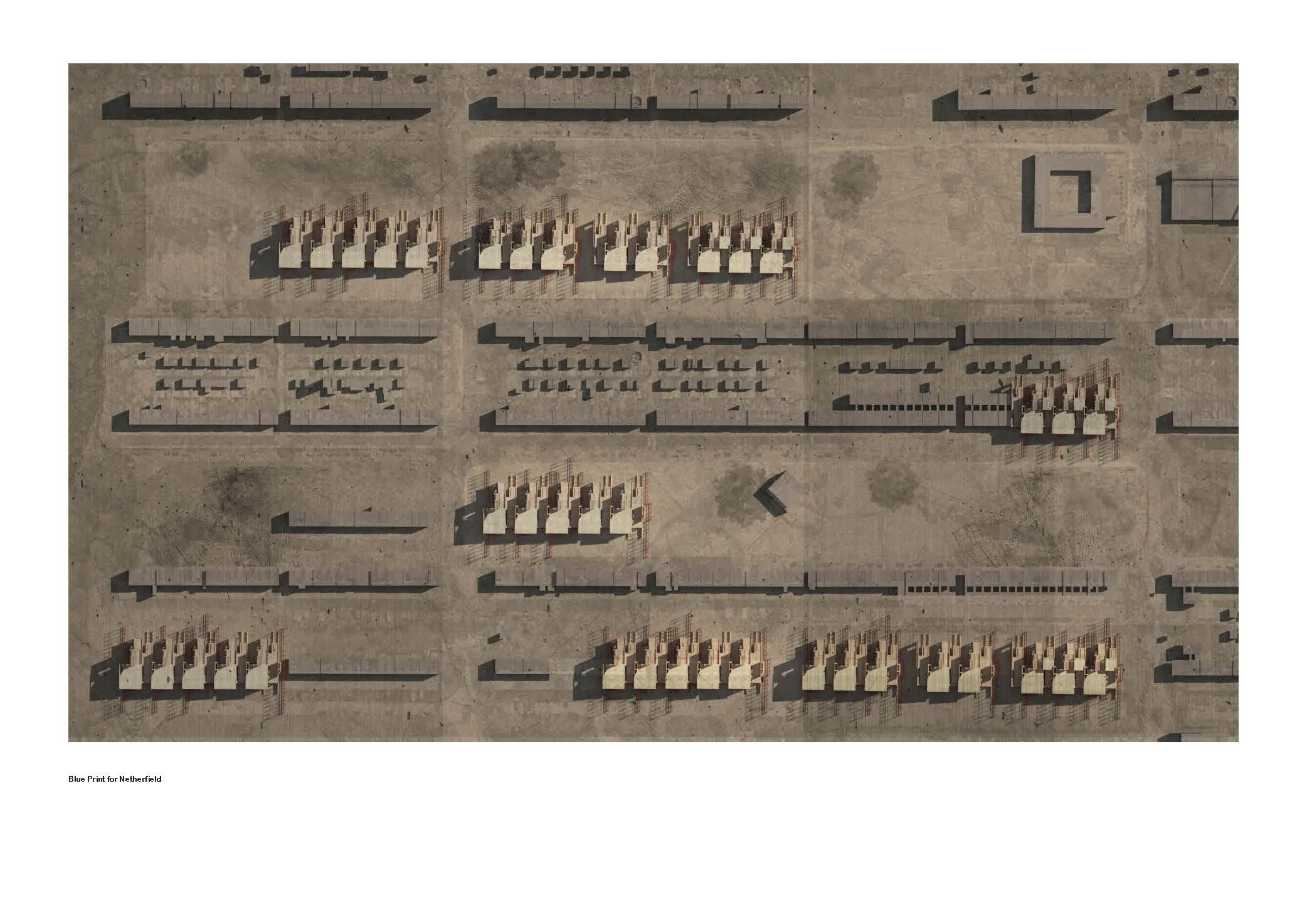
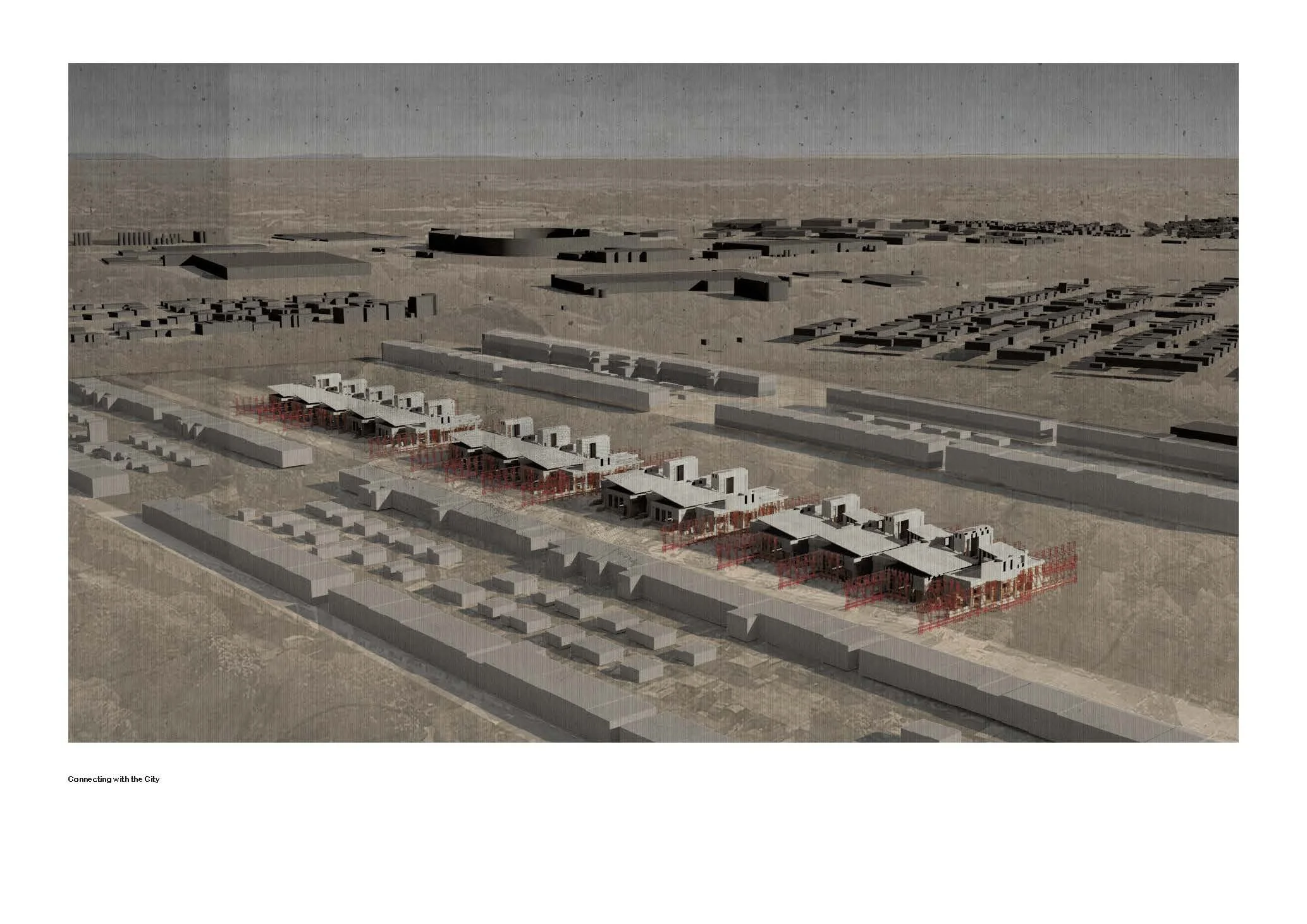
To counteract the isolating, car-centric nature of Milton Keynes' decentralised grid system - which leaves vulnerable, and lone living populations stranded in deprived 1970s estates like Netherfield - this project proposes a multi-generational housing scheme along Hide Way Road.
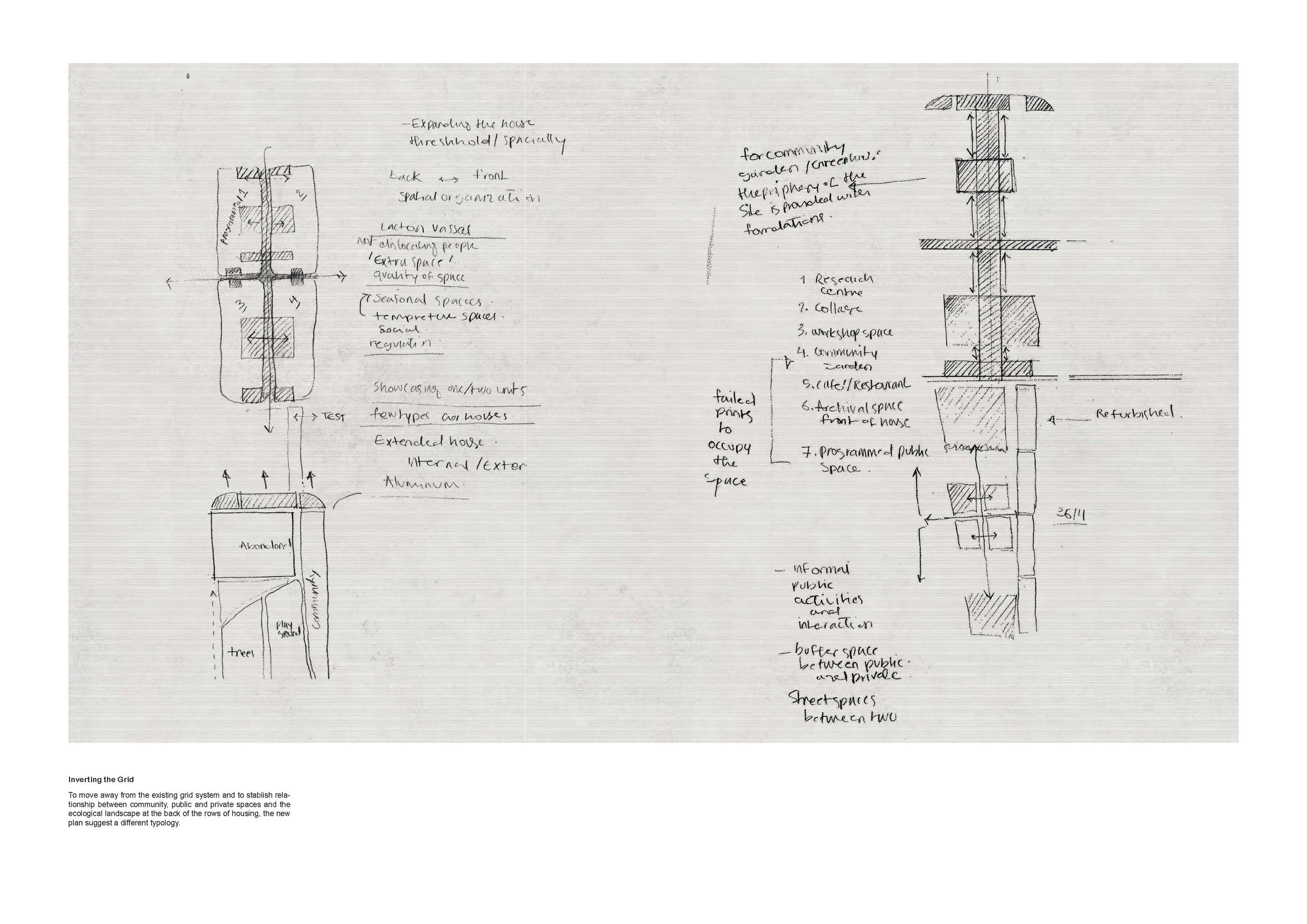
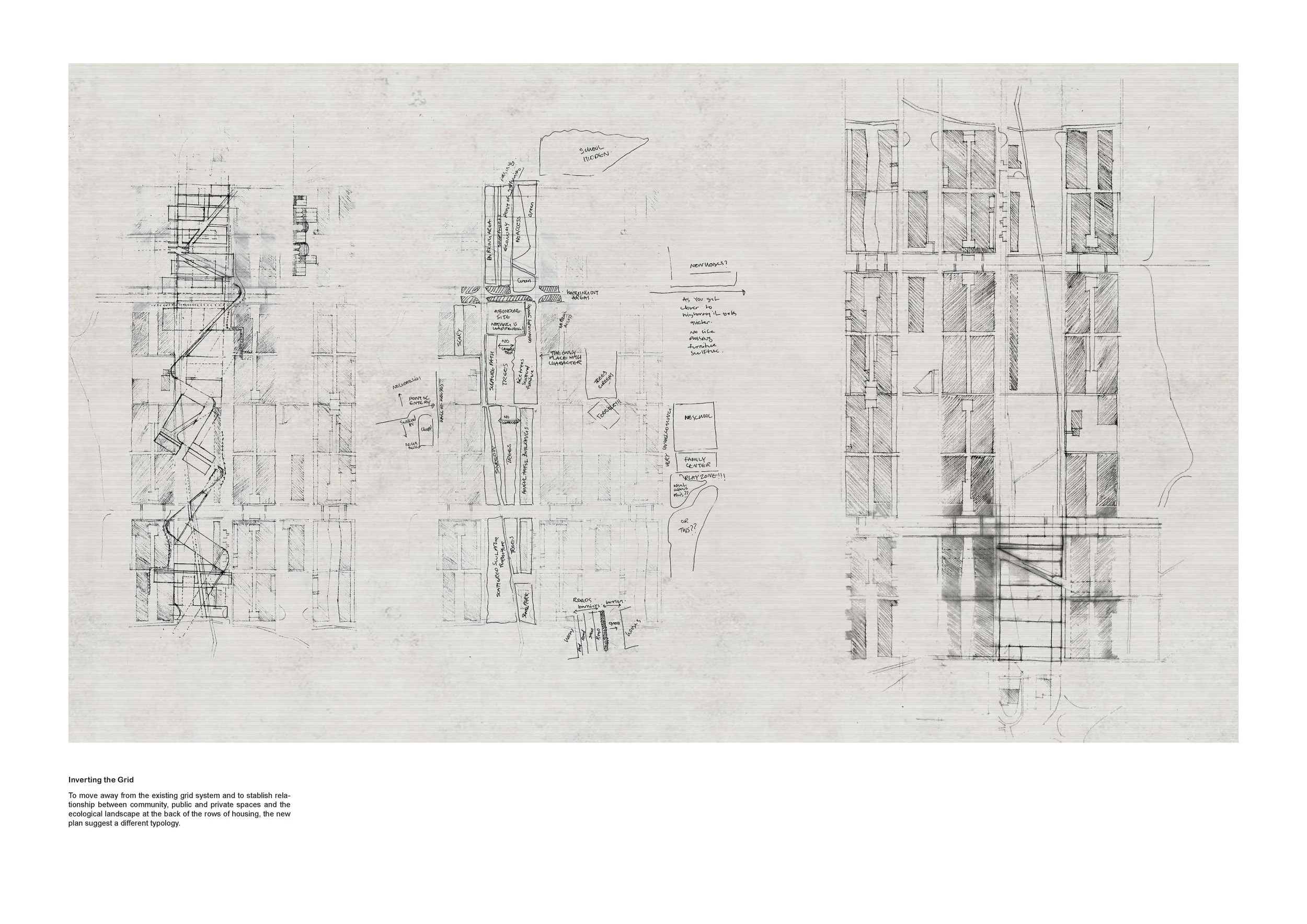
By inverting the traditional grid, the new typology reconfigures the hierarchy of public and private thresholds, bridging front and back spatial arrangements to link residents directly to a shared activity centre and the surrounding ecological landscape. Ultimately, this creates a supportive, caring environment that reconnects isolated individuals, particularly the elderly and young families, back into the wider Milton Keynes community.
Inhabitation of Spines
Both of the houses function around three double faced spines. The walls are activated and programmed to allow a more spacious living.
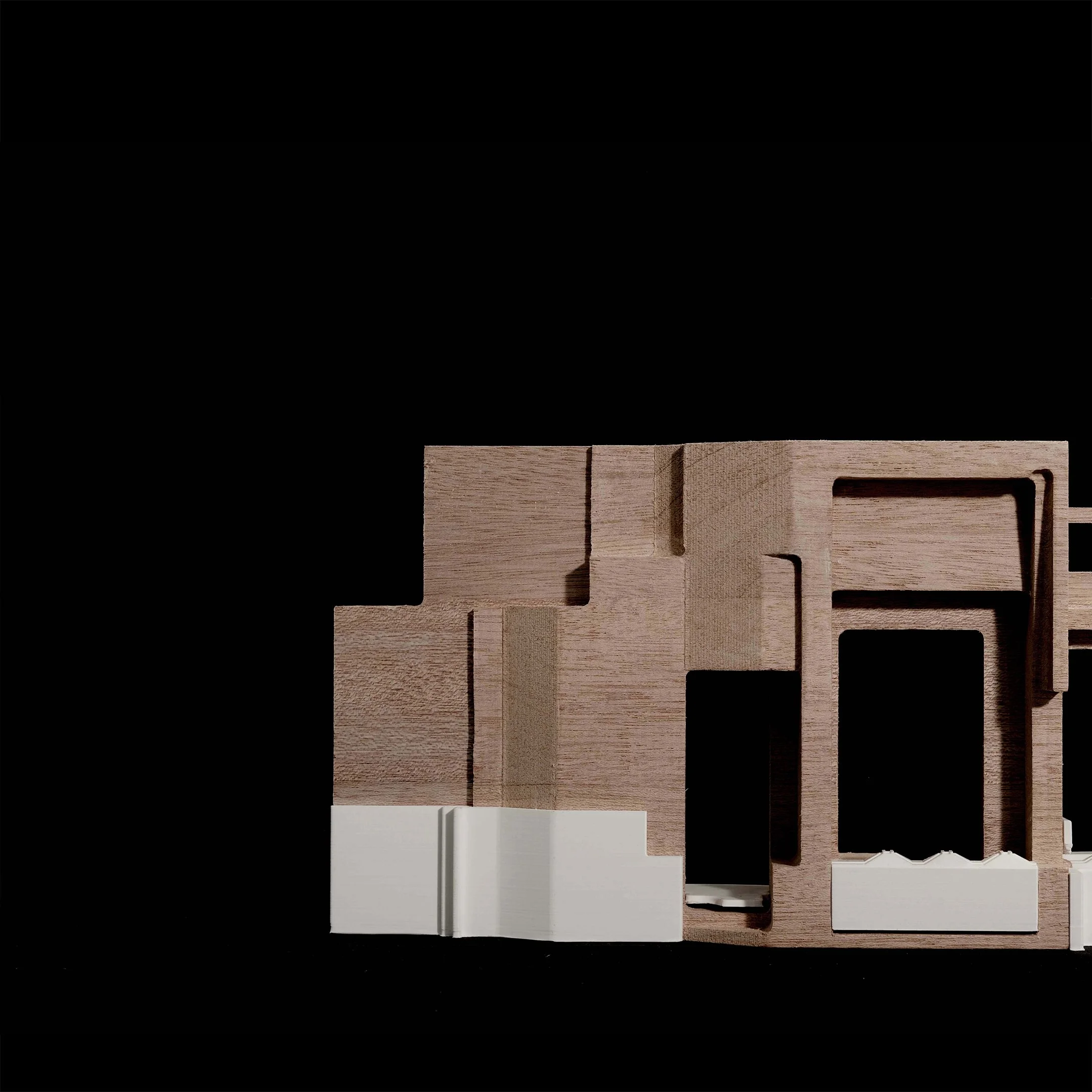
The transition between inside and outside in window openings, doors and light-wells are celebrated with various architectural ex-pressions, encouraging a sense of pause and contemplation both for materiality of the building and its process of construction.